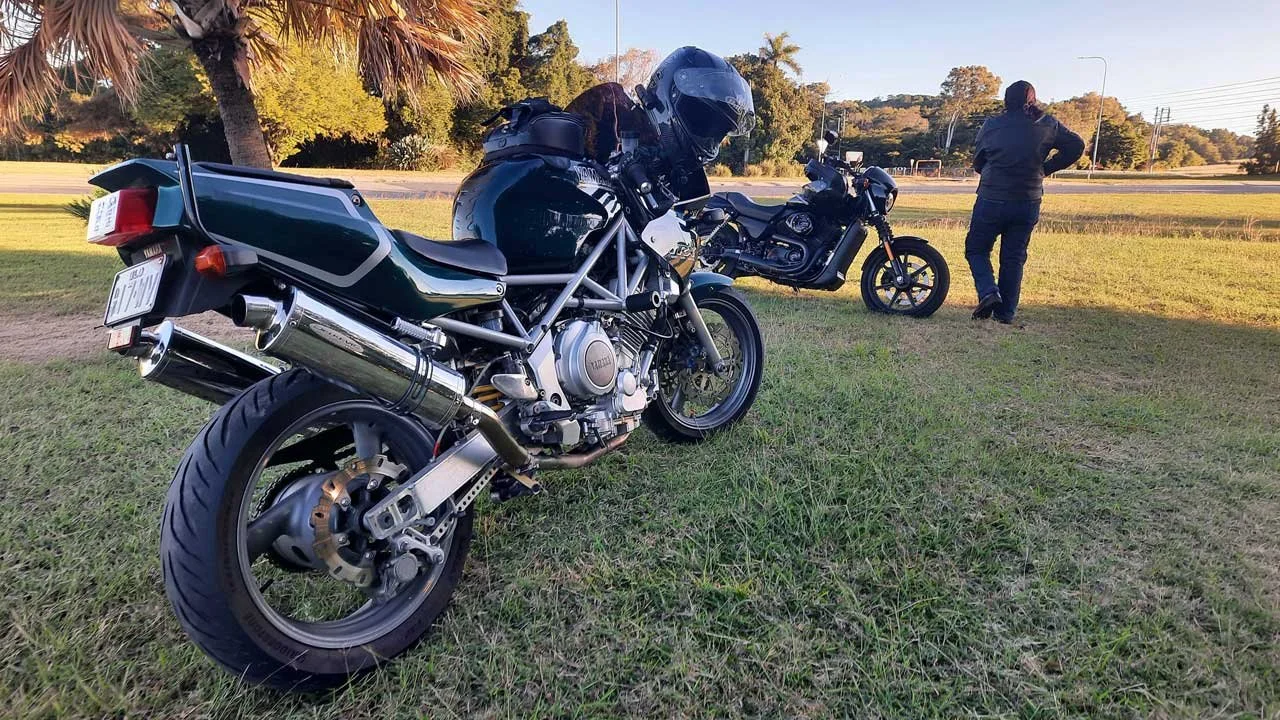
Getting Back on a Motorcycle After Losing an Arm: Where Do You Start?
If you're thinking about getting back on a motorcycle after losing an arm, I'd like to share a few things I've learned from my own experience.
Yes, it is possible to ride a motorcycle with one arm. I've been doing it for years, and I'm certainly not the only one. But there's a considerable difference between being able to operate a motorcycle and being able to ride one safely and confidently.
I've spent years designing and developing my own riding prosthetic, modifying motorcycles, experimenting with different setups and learning what works for me. Some things worked well, others didn't, and there were plenty of lessons along the way.
I'm proud of what I've achieved, but if I were starting again, there are quite a few things I'd approach differently. Hopefully, sharing some of those experiences will help someone else make better-informed decisions about their own return to riding.
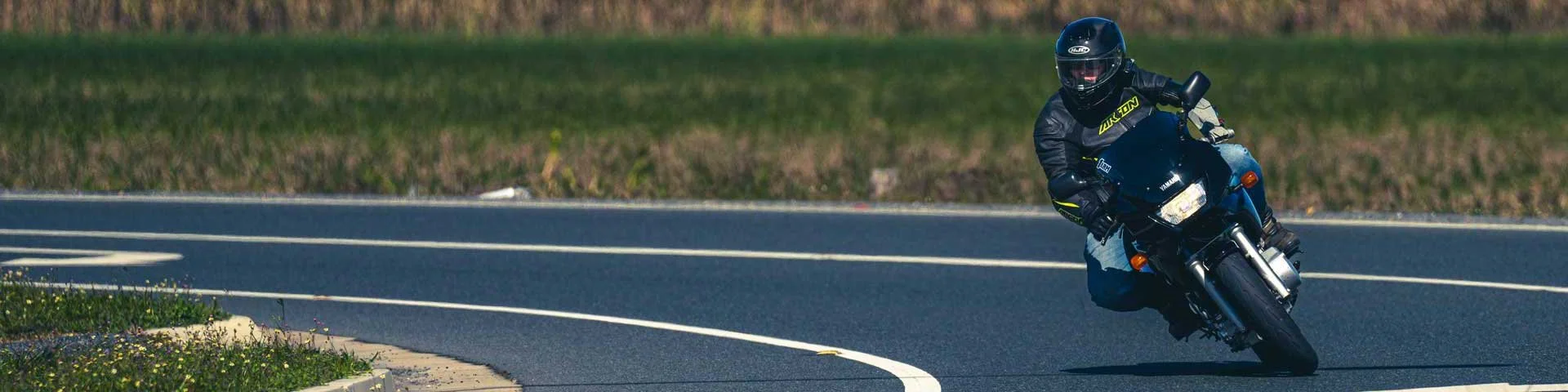
1. Start With Yourself, Not the Motorcycle
This is probably the most important advice I'd give anyone considering returning to riding after losing an arm. Before worrying about motorcycles, prosthetics or modifications, get yourself sorted out first, both physically and mentally.
Take your physiotherapy and rehabilitation seriously. Seek counselling or psychological support, even if you think you're coping reasonably well. Losing a limb is an enormous change to your life, and the effects aren't always immediately obvious. There's a lot more involved than simply recovering from the physical injury.
I was determined to get back on a motorcycle, and that determination helped me achieve things I'm very proud of. Looking back, though, I could have done a much better job of looking after myself throughout the process. I was so focused on finding solutions and getting back to riding that other aspects of my recovery didn't always receive the attention they deserved.
I'd also encourage you to involve your family and friends where possible. They don't necessarily have to approve of your decision to ride, and they certainly don't have to help you build a motorcycle. But having people around you who care about your wellbeing and understand what you're trying to achieve can make a real difference.
Your motorcycle isn't going anywhere. Give yourself the best possible foundation before taking on another significant challenge.
2. Get Your Body Ready
Riding a motorcycle is more physically demanding than many people realise. An upper-limb amputation can introduce additional challenges, depending on your abilities, the motorcycle and the arrangement of its controls.
Strength, balance, coordination and endurance are all important, but don't overlook your ability to handle the motorcycle when you're not riding it. Can you comfortably push it around, hold it upright, get on and off, or manoeuvre it in a confined space? These are everyday tasks that deserve just as much consideration as operating the motorcycle on the road.
I'd recommend working with your physiotherapist or rehabilitation team to develop a suitable exercise programme. Cycling, upper-body conditioning, core strength and balance exercises may all be useful, depending on your circumstances and the demands of your particular setup.
My own physical adaptation took time. I remember returning from one of my first road rides with an absolutely horrendous headache at the base of my neck. My residual limb was fine, and there was only some mild tightness in my shoulder, but the neck pain was something else. Over time, those problems gradually reduced and eventually disappeared.
That was my experience, though, and I wouldn't encourage anyone to simply push through significant pain and hope for the best. Persistent or worsening discomfort can indicate problems with posture, physical conditioning, prosthetic fit or equipment. It's worth getting professional advice rather than risking further injury.
3. Start Small and Be Prepared to Experiment
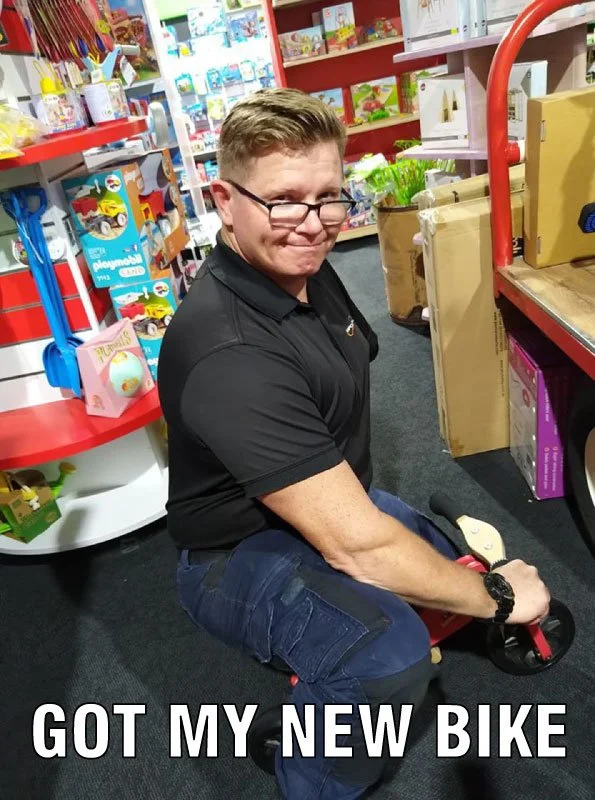
My earliest experiments involved a Yamaha WR450 dirt bike and some fairly questionable homemade prosthetics.
At that stage, I wasn't trying to build the ultimate motorcycle. I wanted something I could use to practise skills, test prototype prosthetic hands and explore different ideas without committing to an expensive road bike. The WR450 had a modified clutch arrangement, and it became something of a test platform for my designs.
There was plenty of computer modelling, 3D printing, laser cutting and experimenting with different materials. Even bits of broom handle found their way into the development process. I'd build something, test it, identify a problem, make changes and test it again. That cycle continued through many different versions of the arm.
Some of those early rides were genuinely frightening. The prototype prosthetics were rough, and controlling the motorcycle wasn't always easy. I also became remarkably good at digging long trenches in the backyard with the WR450, although that wasn't exactly the objective.
As the designs improved, so did my control of the motorcycle. Adjustments to the wrist's rotational resistance and the shock arrangement made noticeable differences, and I gradually developed a system that felt more predictable and comfortable to use.
One of the biggest lessons from that process was that simply getting a motorcycle moving doesn't mean you've developed a reliable way to control it.
If you're considering returning to riding, I'd encourage you to investigate a manageable, relatively inexpensive motorcycle before spending a fortune on your dream bike. A small dirt bike might be suitable for some people, but certainly not everyone. Seat height, weight, ergonomics, control arrangements and physical capability all need consideration.
Any riding or testing needs to take place with the appropriate medical and legal clearance, suitable equipment and professional guidance where required. A controlled environment is important, particularly when you're assessing unfamiliar equipment or techniques.
You may also discover that returning to motorcycling isn't quite what you imagined. That's something worth finding out before committing substantial time and money to modifications.
4. Prosthetic Arm or No Prosthetic?
This is a question I get asked regularly, and my answer is that it depends on the individual.
I've seen other amputee riders use different approaches, and I don't believe there's one solution that suits everybody. The type of amputation, physical capability, motorcycle and personal preferences all influence what might work.
Personally, I strongly prefer riding with a prosthetic. For me, the biggest advantage is control, particularly during slow-speed manoeuvres. With my setup, I can ride at walking pace in tight circles while controlling the handlebars through my prosthetic, even with my right hand off the bars. It's an example of how much control I've been able to develop with the arm, although it's not something I'd suggest another rider attempt as a test of their own equipment.
Getting to that point took considerable development. My riding arm wasn't something I could purchase off the shelf. I designed and developed the mechanical system myself, while a qualified prosthetist manufactured and fitted the socket connecting it to my residual limb. The socket was constructed with additional carbon-fibre reinforcement for its intended use.
A machinist friend also provided practical manufacturing assistance towards the later stages of development, once the design had become more established. Most of the work, however, involved my own design, modelling, testing and experimentation.
The arm is still evolving, and I'm continuing to improve it. It isn't currently available as a commercial product, and I wouldn't recommend attempting to copy my design without the appropriate engineering expertise and professional assessment.
If you're considering a prosthetic for riding, find a good prosthetist and discuss what you're hoping to achieve. Fit, comfort, movement, loading and the way the prosthetic interacts with the motorcycle all deserve careful attention.
My approach has worked for me, but that doesn't automatically make it the right solution for someone else.
5. Understand the Motorcycle Before You Modify It
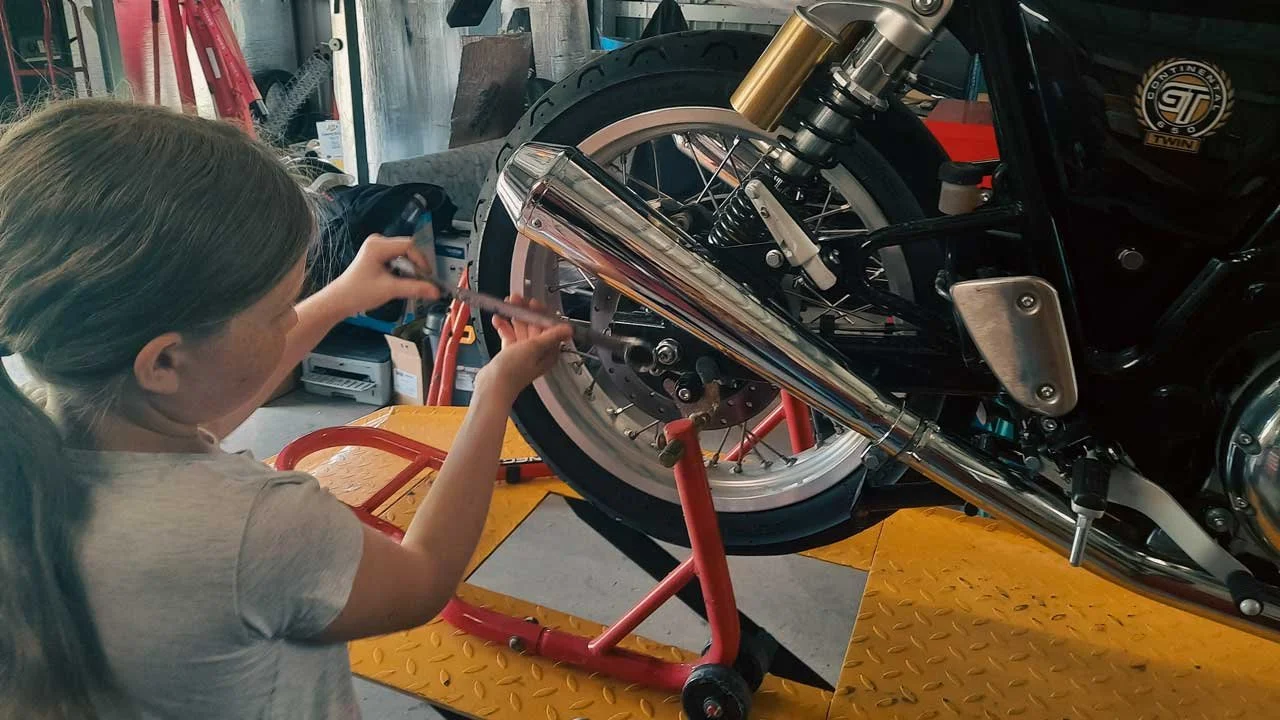
If you're planning to modify a motorcycle yourself, do your homework. And I mean a lot of homework.
You need a sound understanding of the motorcycle's mechanical and electrical systems, particularly anything associated with the controls. Learn how the components operate, how they interact and what could happen if something fails. Good tools, a suitable workspace and reliable technical information are important, as is knowing when a job is beyond your own abilities.
I've used several different control arrangements over the years. Earlier versions involved relocating or removing some left-hand controls, including the clutch lever and switchgear. My more recent setups allow me to retain those original controls, reducing the extent of the changes I need to make.
One thing to remember is that a modification isn't necessarily legal just because it works. Depending on your location and the nature of the changes, you may need engineering approval, inspections, certification or updates to registration and insurance arrangements.
Motorcycle controls aren't an area where I'd recommend cutting corners. If you don't have the necessary skills, involve qualified people who do, and have any proposed modifications assessed against the relevant requirements.
6. Sort Out the Legal and Medical Requirements Early
I'd strongly recommend investigating the legal and medical requirements before spending significant money on a motorcycle or prosthetic.
In Queensland, Australia, a physical condition that may affect vehicle control can trigger medical fitness-to-drive requirements. Depending on your circumstances, assessments, medical documentation, occupational therapy input or licence conditions may be involved.
The requirements can also differ depending on whether you're obtaining a motorcycle licence for the first time or returning to riding with an existing licence. Queensland's Q-Ride training and assessment requirements may apply as well.
I went through assessments as part of my own return to riding, but I wouldn't assume that my experience represents the current process for everyone. Regulations and individual requirements can change, so it's important to obtain advice directly from the Queensland Department of Transport and Main Roads.
If you're outside Queensland, contact the relevant licensing authority in your own state or country. I'd also recommend discussing your circumstances, prosthetic and any motorcycle modifications with your insurer.
Sorting these matters out early could save considerable time, expense and frustration later.
7. Practise. Then Practise Some More.
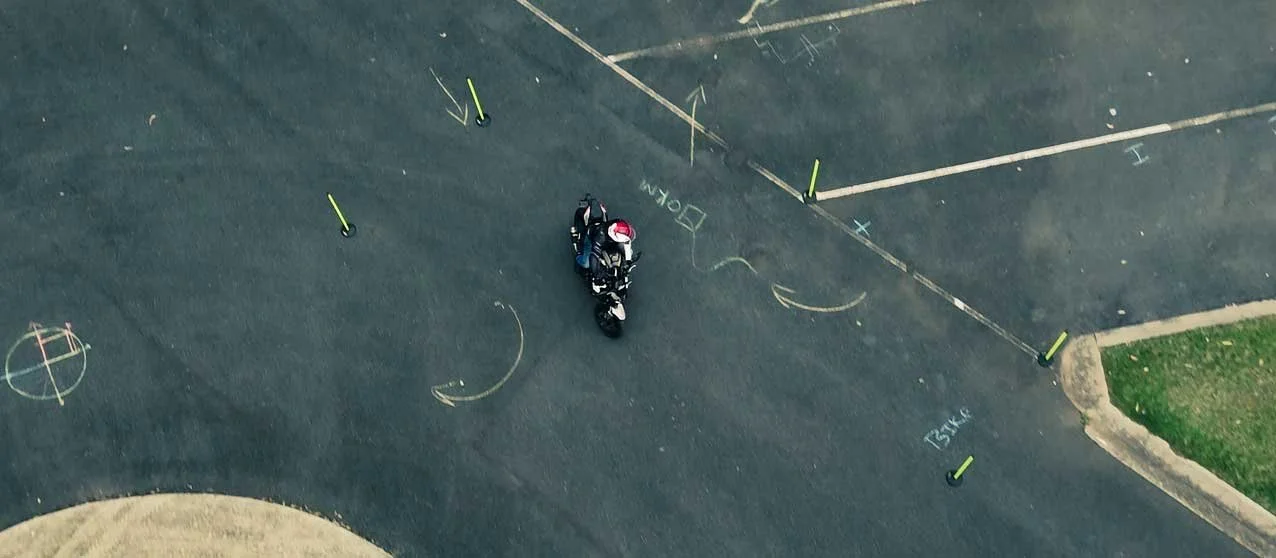
I cannot stress this enough. Getting a motorcycle moving is relatively easy. Developing the ability to control it consistently, particularly when something unexpected happens, requires considerably more work.
I'm a big believer in slow-speed motorcycle practice. I genuinely enjoy it, and I think it's one of the most valuable forms of skill development for any motorcyclist, regardless of whether they have one arm or two.
Slow-speed manoeuvres demand coordination, balance, smooth control inputs and an understanding of how the motorcycle responds. They can also expose weaknesses in your physical capability, technique or equipment that might not be obvious when riding at higher speeds.
If I were helping another amputee assess their readiness, I'd begin by looking at how comfortably they could mount, dismount and manage the motorcycle while stationary. Once appropriately cleared and in a suitable training environment, I'd want to observe basic, controlled take-offs and stops before progressing to anything more demanding.
With my particular prosthetic arrangement, acceleration and braking place different loads on my residual limb. Taking off tends to unload it, while braking increases the load. If someone were experiencing significant pain, discomfort or difficulty managing those forces, I'd want them to investigate the problem before progressing.
These observations are part of how I'd approach assessing basic readiness, not a replacement for medical assessment, professional rider instruction or licensing requirements.
Most importantly, don't measure your progress against somebody else's. Different people will require different amounts of time, different equipment and different approaches.
The objective isn't to rush back onto the road. It's to develop reliable control and the judgement to use it appropriately.
8. Pay Attention to Your Mind as Well as Your Body
This is an area I didn't give enough attention to when I first returned to motorcycling.
I was extremely determined, and that determination helped me overcome some considerable technical challenges. But determination doesn't necessarily lead to good decisions, particularly when emotions, habits and outside influences become involved.
During the development of my riding arm, I spent a lot of time researching motorcycle crashes, risk and rider behaviour. That research changed how I thought about motorcycling and my own responsibilities as a rider.
What I discovered, however, was that understanding risk and consistently managing it are two different things.
Once I was back on the road, group riding, competitiveness and my own ego sometimes influenced my behaviour in ways that contradicted what I'd learned. Looking back, there were periods when I was creating unnecessary risks for myself.
Supervising learner riders later reinforced the value of patience, restraint and riding at a pace that allows you to think clearly. It also reminded me how much influence other riders can have on someone's developing habits and attitudes.
I'm not a perfect rider, and I still make mistakes. But I'm far more conscious of the circumstances that can encourage poor decisions, and I make a deliberate effort to manage those influences.
If you're returning to motorcycling after a traumatic accident, I'd encourage you to consider the psychological aspects of that decision alongside your physical recovery. Discussing your experiences with an appropriately qualified professional may help you recognise challenges that determination alone won't resolve.
You don't need to prove anything by ignoring fear, distress, fatigue or other warning signs. Returning to riding should be a considered decision, not something you feel compelled to achieve at any cost.
9. Be Prepared to Hear 'Not Yet'
This may be one of the harder things to accept, particularly if you've already made up your mind that you're going to ride again.
You might have the motivation, the motorcycle and a clear idea of what you want to achieve. But that doesn't necessarily mean you're ready.
If your body isn't coping with the physical demands, your equipment isn't functioning reliably, your control is inconsistent or the required assessments haven't been completed, there may still be work to do.
For some people, returning to motorcycling may not be appropriate. I appreciate that's not necessarily what someone wants to hear, but it's a possibility that deserves honest consideration.
Motorcycles carry real risks, and an upper-limb amputation can introduce additional challenges that need to be understood and managed. The aim shouldn't simply be to demonstrate that you can operate a motorcycle. It should be to establish whether you can ride with an acceptable level of safety, using equipment and techniques suited to your circumstances.
There's no prize for rushing the process.
Final Thoughts
Losing my arm didn't end my motorcycling life, but getting back on a bike involved considerably more than building a prosthetic and modifying a few controls.
It took years of engineering, experimentation, physical adaptation, practice and learning from mistakes. I'm proud of what I've achieved, and I'm still working to improve both my riding arm and my abilities as a motorcyclist.
If I were starting again, though, I'd place much greater emphasis on rehabilitation, psychological wellbeing and preparation before focusing on the motorcycle itself.
I know what it's like to want something badly enough that you're prepared to throw everything you've got at it. That determination can be enormously valuable, but it isn't a substitute for preparation, good judgement or honest assessment of your abilities.
If sharing my experiences helps another amputee make informed decisions, avoid some of my mistakes or better understand the challenges ahead, then I'm happy to share what I've learned.
Take your time, seek good advice, build your capability and be honest about your limitations. If returning to riding is realistic for you, give yourself the best possible chance of doing it well.
Ride your own ride. Take responsibility for it. And never stop learning.
This article shares my personal experience and general considerations. It isn't medical, engineering or licensing advice. Individual circumstances vary, and returning to motorcycling after an amputation should involve appropriate professional assessment and compliance with local laws.