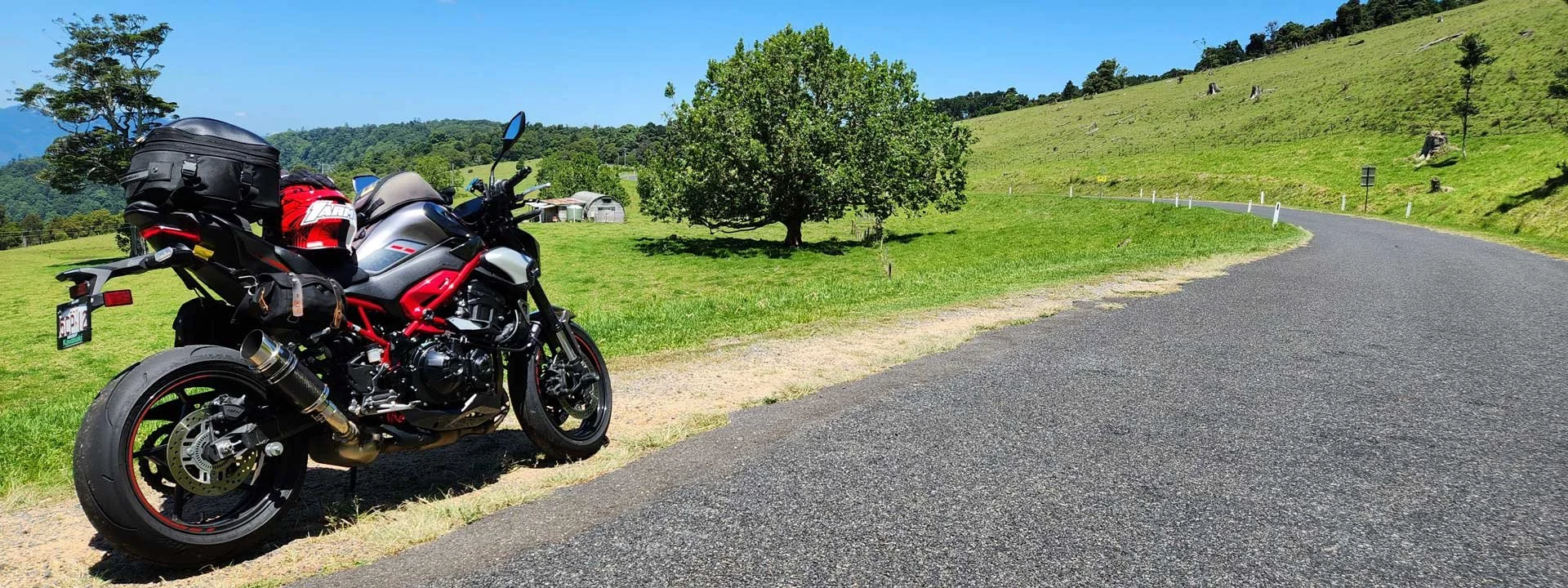
motorcycle safety
When did you last question your riding, challenge a bad habit, or deliberately practise a skill?
Motorcycle safety isn't about being perfect or taking the enjoyment out of riding. It's about recognising there's always room to improve, no matter your experience.
Ride your own ride. Take responsibility for it. Never stop learning.
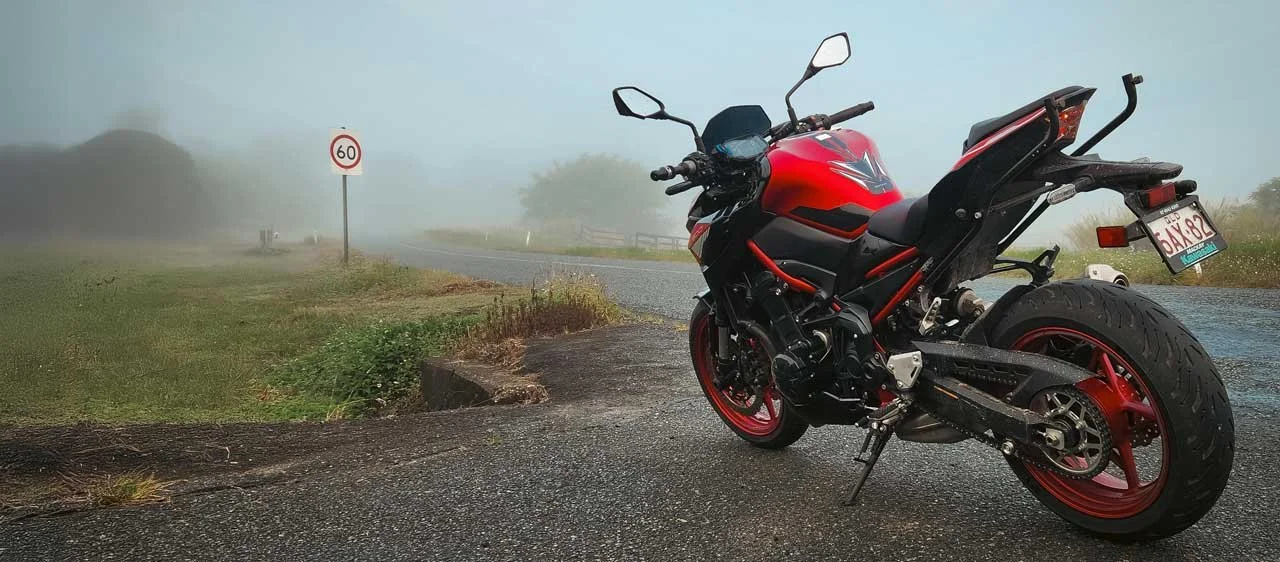
Motorcycle safety isn’t about taking the enjoyment out of riding. It’s about developing the skills, awareness and attitude to keep enjoying it for years to come.
I’ve seen firsthand how quickly things can go wrong on a motorcycle, and I’ve spent much of my life learning from it.
Today, as a qualified motorcycle instructor and lifelong rider, I focus on helping others build confidence, competence, and a healthy respect for the risks involved.
I lead by example, take responsibility for my own riding, and encourage others to become better riders—no matter how long they’ve been riding.
I’m Not Here to Preach
Let’s get something straight. I’m not a perfect rider, and I don’t pretend to be.
I still make mistakes. I occasionally make poor decisions, and a bit of stupidity still sneaks through.
The difference these days is that I’m much more aware of those moments, and I try to learn from them.
I don’t believe in telling everyone how they should enjoy motorcycling. We all ride for different reasons, on different motorcycles, with different abilities and appetites for risk.
But I do believe we have a responsibility to ourselves, our passengers, other road users and the people who care about us.
Ride your own ride. Enjoy it. Just understand that your decisions can have consequences well beyond yourself.
Surviving a Motorcycle Accident Doesn’t Make Me an Expert
Losing my left arm in a motorcycle accident in 1998 changed my life. But surviving that accident didn’t automatically make me a better rider, a safety expert or someone whose opinions should carry more weight than anyone else’s.
It gave me a perspective I wouldn’t wish on anyone.
Before my accident, I considered myself an experienced and capable rider. I’d seen the consequences of serious motorcycle crashes, yet somewhere in the back of my mind I still believed it wouldn’t happen to me.
I'd ridden that particular corner countless times. I knew the road, I knew the motorcycle, and I expected everything to go exactly as it had before.
It didn't.
The accident certainly taught me about the consequences of getting things wrong, but it didn't immediately change the way I understood motorcycle safety.
That came later, through researching motorcycle accidents, observing rider behaviour and taking a harder look at some of my own decisions before the accident.
I began to recognise just how much our attitudes, assumptions and judgement can influence what happens on a motorcycle. Familiarity with a road doesn't make it safe, and being capable of riding quickly doesn't necessarily mean we're making good decisions.
But here's the important part: I don't believe telling frightening crash stories is enough to change rider behaviour.
The Cost Goes Beyond the Accident
People often see me riding today and focus on the fact that I’ve managed to return to motorcycling with one arm.
What they don’t see is everything that happened between the accident and now.
The rehabilitation, the frustration, the emotional challenges, the impact on relationships, and the enormous effort of rebuilding a life.
And rebuilding doesn’t necessarily end.
More than 27 years later, I’m still learning, adapting and working on myself.
I’m proud of what I’ve achieved, but I also recognise how much the accident cost the people around me.
Not everyone who experiences a serious accident gets the opportunity to rebuild. Some never recover fully. Others never come home.
That’s why I take motorcycle safety seriously.
Not because I’m frightened of motorcycles, but because I understand how much you can lose.
Good Riders Never Stop Learning
One of the biggest traps in motorcycling is believing that experience automatically equals competence.
It doesn’t.
You can spend decades riding motorcycles and still practise the same poor habits.
Equally, a relatively inexperienced rider with the right attitude, sound instruction and a willingness to practise can develop an excellent foundation.
I believe good riding combines physical skills, situational awareness, sound judgement, and the ability to recognise your own limitations.
That’s why I keep practising.
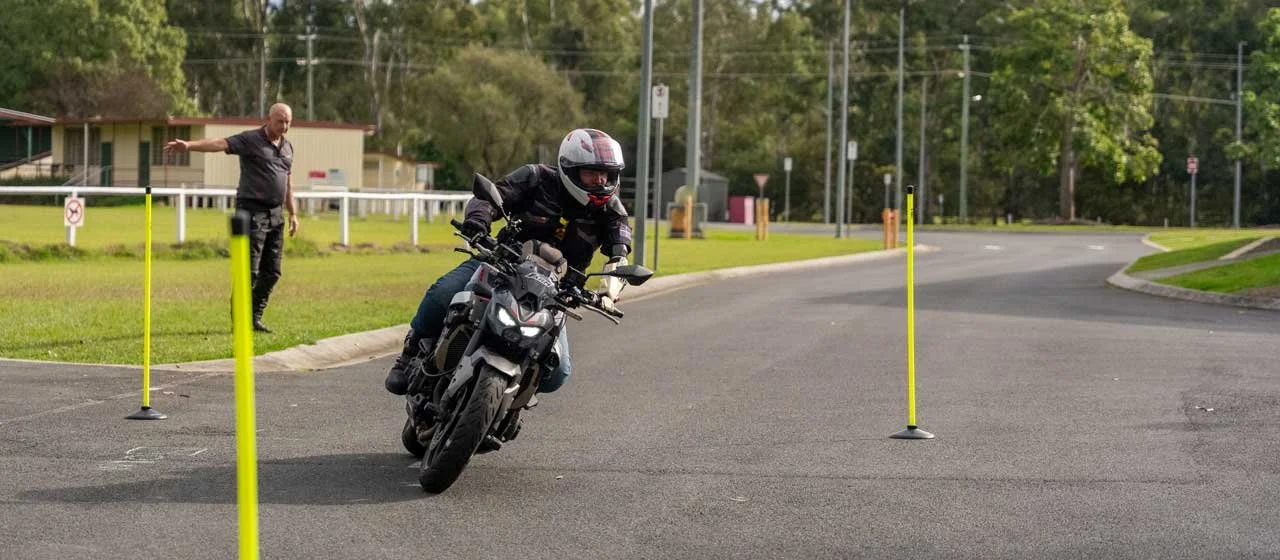
Slow-speed control, braking, cornering, observation, hazard management and smooth, deliberate motorcycle control are all skills worth revisiting.
I enjoy riding on the road, practising manoeuvres and taking part in track days. They’re different environments with different demands, but each provides opportunities to learn.
Being able to ride quickly doesn’t automatically make someone a good road rider. Neither does being able to perform impressive tricks.
For me, real competence means controlling the motorcycle confidently, making good decisions, and adapting to changing circumstances without unnecessarily increasing risk.
And there’s always room to improve.
Why I Became a Motorcycle Instructor
I’ve always enjoyed helping other riders, especially those just beginning their motorcycling journey.
It is rewarding to watch someone develop a skill they once struggled with, or to see their confidence grow as they get more comfortable on their motorcycle.
Becoming a qualified motorcycle instructor was a natural progression of that interest.
It also allowed me to turn something I’ve believed in for years into something practical.
My approach to instruction isn’t about pushing people beyond their abilities or trying to turn them into exceptional riders overnight.
It’s about understanding where they’re at, identifying weaknesses, reinforcing good techniques and helping them develop confidence through competence.
I want learners to understand not just how to manoeuvre, but why they’re doing it and how that skill applies to real-world riding.
And importantly, I want them to develop the habit of questioning their own riding, recognising mistakes and continuing to improve long after they’ve obtained their licence.
Working with learners also keeps me accountable. If I’m going to demonstrate good riding habits, I’d better practise them myself.
Your Attitude Matters as Much as Your Ability
Motorcycling doesn’t create someone’s personality. It often reveals it.
Impatience, competitiveness, impulsiveness, overconfidence and ego can all influence the decisions we make on a motorcycle.
I know this because I’ve had to confront some of those traits in myself.
And I still do.
A technically capable rider with poor judgement can endanger themselves and others. Likewise, someone with a sensible attitude but underdeveloped skills can find themselves in situations they’re not equipped to manage.
Good riding requires both.
I encourage riders to be honest with themselves about their abilities, motivations, and decisions.
You don’t have to prove anything to the person riding beside you. You don’t have to keep up with someone faster, and you certainly don’t have to impress anyone.
Sometimes the smartest decision you can make is to slow down, back off or decide that today isn’t the day.
There’s no shame in that.
Leading by Example
I’ve come to understand that you can’t force someone to become a safer rider.
You can provide information, demonstrate good techniques, offer guidance and share experiences, but ultimately the decision to change belongs to the individual.
That’s why I place so much importance on leading by example.
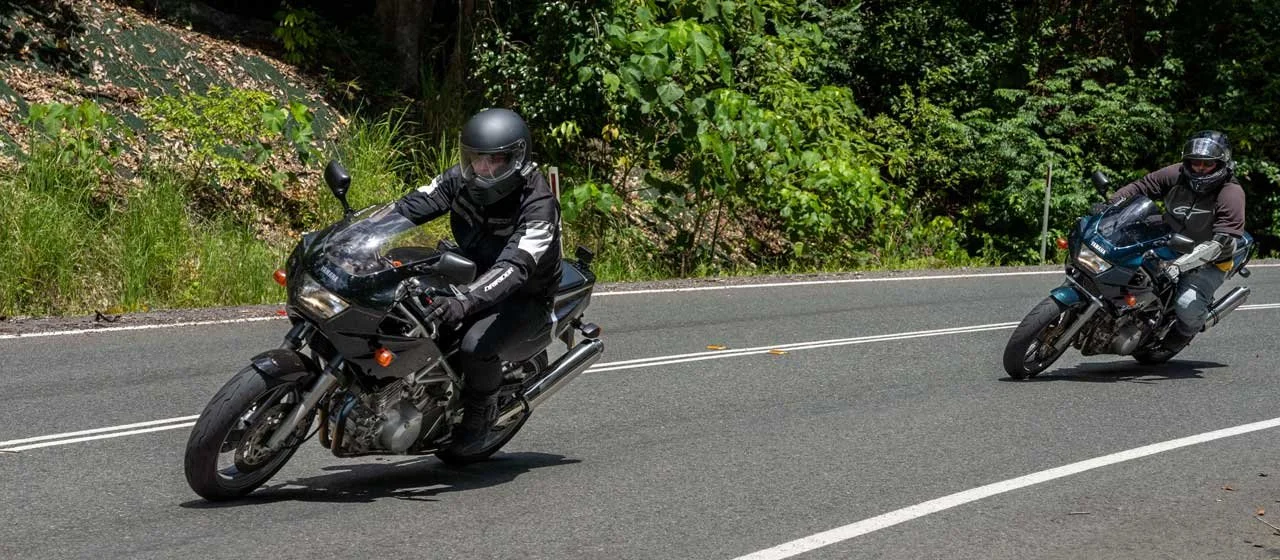
I choose the people I ride with carefully. I try to recognise when my own attitude isn’t where it should be. I practise the skills I teach, and I make a conscious effort to ride in a way that reflects what I believe.
I don’t always get it right.
But I keep working at it.
I also believe the motorcycling community plays an important role. Experienced riders can have an enormous influence on newer riders, both positively and negatively.
The attitudes we demonstrate, the behaviours we celebrate, and the advice we offer all shape the riders coming up behind us.
I want to be part of that in a positive way.
Where I’m Heading
Motorcycling has been part of my life for decades. It’s brought me enormous enjoyment, lifelong friendships, personal challenges, and opportunities I might never have experienced otherwise.
It’s also cost me more than I could ever have imagined.
Despite that, I still love riding motorcycles.
My goal isn’t to discourage anyone from riding or to suggest that every risk can be eliminated.
It’s to help people enjoy motorcycling with better skills, greater awareness, and a more considered approach to their decisions.
Through motorcycle instruction, sharing my experiences, and continuing to develop my own riding, I hope to contribute meaningfully to motorcycle safety.
I don’t need everyone to agree with me, and I certainly don’t have all the answers.
But if something I teach, demonstrate, or share helps another rider avoid a mistake, develop a skill or make a better decision, then I reckon that’s time well spent.
Ride your own ride. Take responsibility for it. And never stop learning.