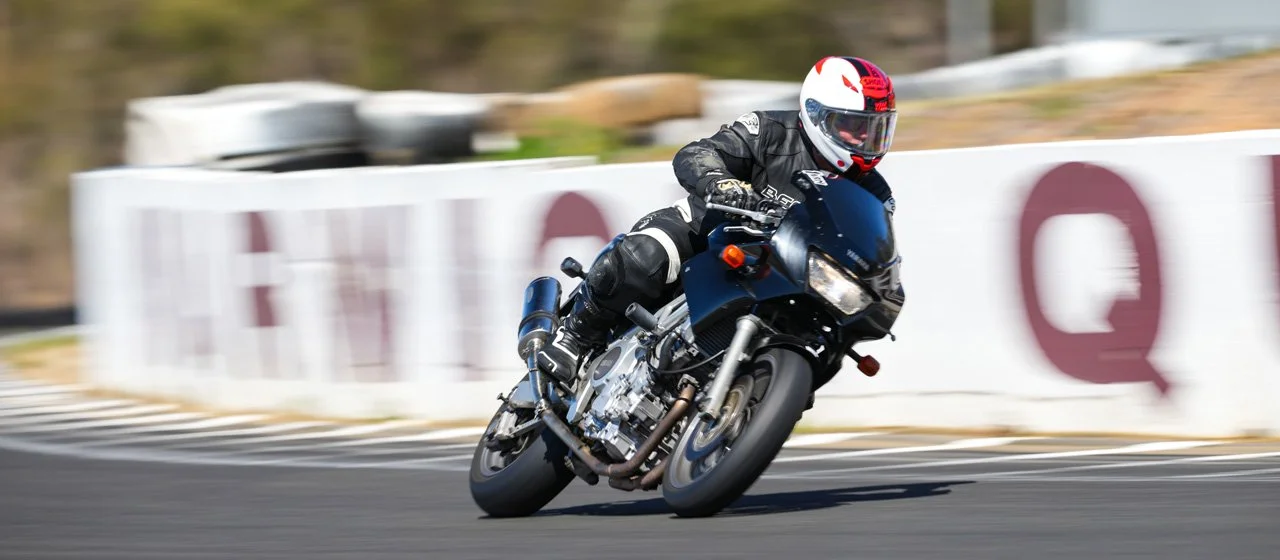
the arm
Designed out of necessity. Developed through experience. Refined with every ride.
What started as a solution to get me back on a motorcycle has become an ongoing engineering project, shaped by years of design, testing and practical experience.
It's not a commercial product or a universal solution. It's an arm I designed for myself, and one I'm still finding ways to improve.
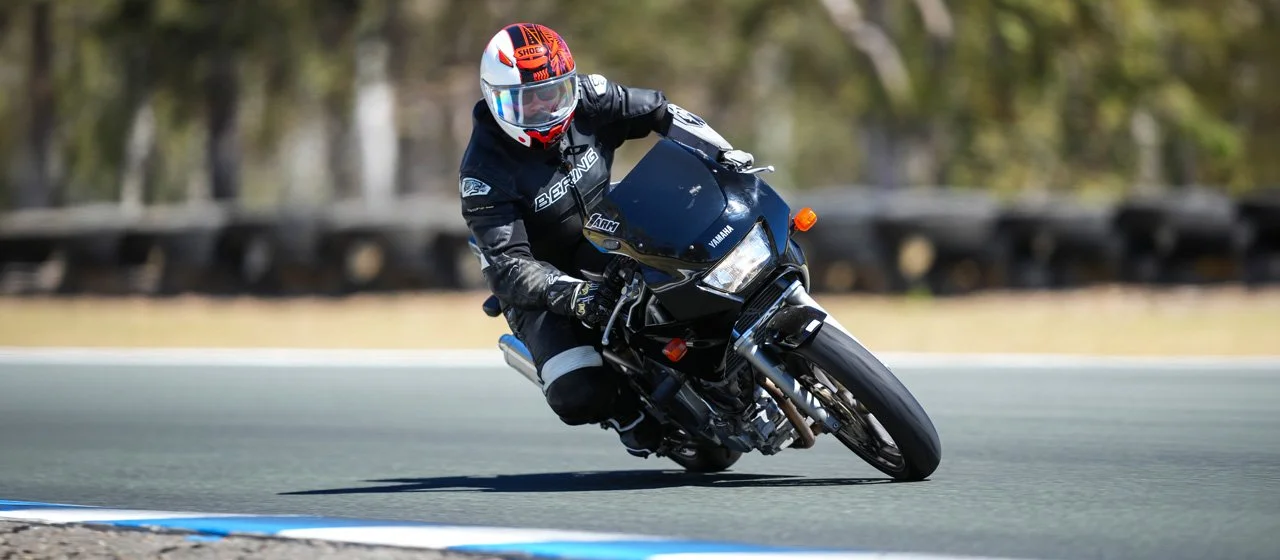
The Arm
Designed out of necessity. Developed through experience. Refined with every ride.
When I decided to return to motorcycling after losing my left arm, I had a fairly significant problem to solve.
Motorcycles are generally designed for people with two functioning arms. I only had one, and the prosthetic solutions I'd seen didn't offer the movement, control or riding experience I was looking for.
So I decided to build my own.
What started as a relatively simple mechanical solution has evolved into a purpose-built riding prosthesis, developed through years of design, testing, failures and improvements.
It's not a commercially manufactured product or a universal solution for amputee riders. It's something I've designed specifically around my body, my abilities and the motorcycles I ride.
And while I'm proud of how far it's come, there's still plenty I'd like to improve.
Why I Built My Own Arm
My original thinking was pretty straightforward.
I figured no sane prosthetics company would be particularly enthusiastic about building me an arm specifically for riding motorcycles, just so I could potentially go out and lose the other one.
So I didn't ask.
I had the socket from my original hospital-issued prosthesis, a dirt bike and enough mechanical knowledge to make a start.
The challenge was figuring out how to connect everything together in a way that allowed me to operate the motorcycle.
Preferably with me remaining attached to the correct bits.
The first solution was basic, inexpensive and fairly crude. But it worked well enough to prove that returning to motorcycling was possible.
That was the beginning of a project that would occupy a considerable amount of my spare time, money and engineering curiosity.
As my riding progressed, so did my expectations.
I wanted more natural movement, less physical effort, better control and a design that didn't look like something I'd cobbled together from the scrap bin.
Although, to be fair, some of the early versions weren't far off.
The Evolution of the Arm
The arm hasn't been one continuous design. It's gone through several major revisions, with countless smaller modifications along the way.
Each version addressed limitations I'd discovered while riding, and each taught me something about the relationship between mechanical design, human movement and motorcycle control.
version 1.0
Proving the Concept
The first arm was built around simplicity and affordability.
At the time, my budget was limited, and I wasn't prepared to invest heavily in an elaborate mechanism without knowing whether the concept would work.
The design was relatively basic, with restricted movement and a rudimentary hand-release system.
It wasn't particularly elegant, comfortable or attractive.
But it achieved something important: it got me riding again.
Version 1 proved the concept and gave me a foundation to work from. It also highlighted plenty of things that needed improving.
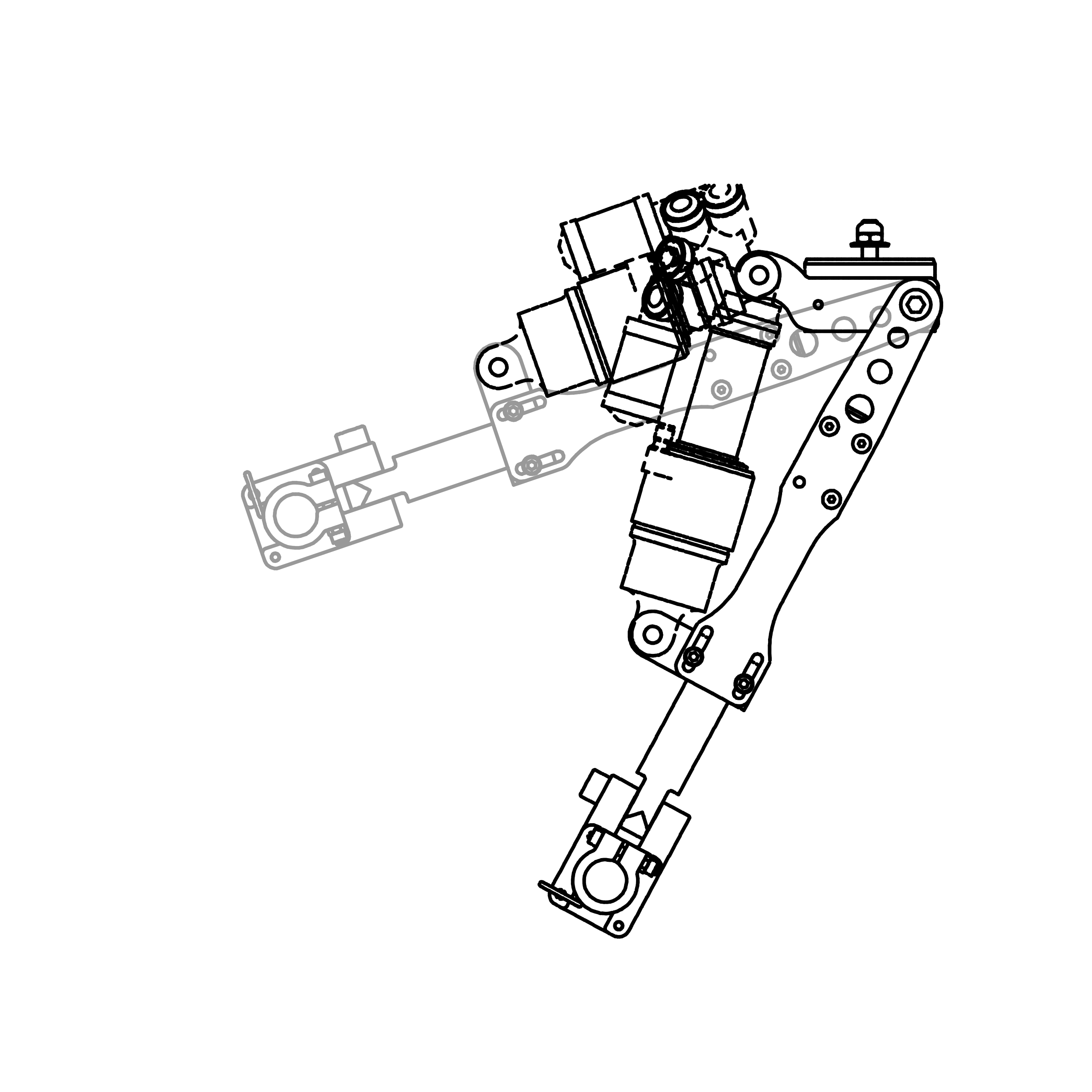
Version 2.0 / 2.5
A Turning Point
As I gained experience riding with the prosthesis, the limitations of the original design became increasingly obvious.
The biggest issue was movement.
I wanted an arm that worked more naturally with my shoulder and body position, rather than something that simply held me onto the motorcycle.
I'd already developed ideas for a more sophisticated mechanical system, but manufacturing costs had initially put them out of reach.
Eventually, after plenty of overtime and subcontracting work, I had the resources to pursue the design I'd wanted from the beginning.
The difference was substantial.
The revised mechanism provided a much greater range of movement and a smoother, more progressive feel. Riding became less physically demanding, and I could work more naturally with the motorcycle.
This generation also introduced significant improvements to the hand-release system and made greater use of 3D-printed components.
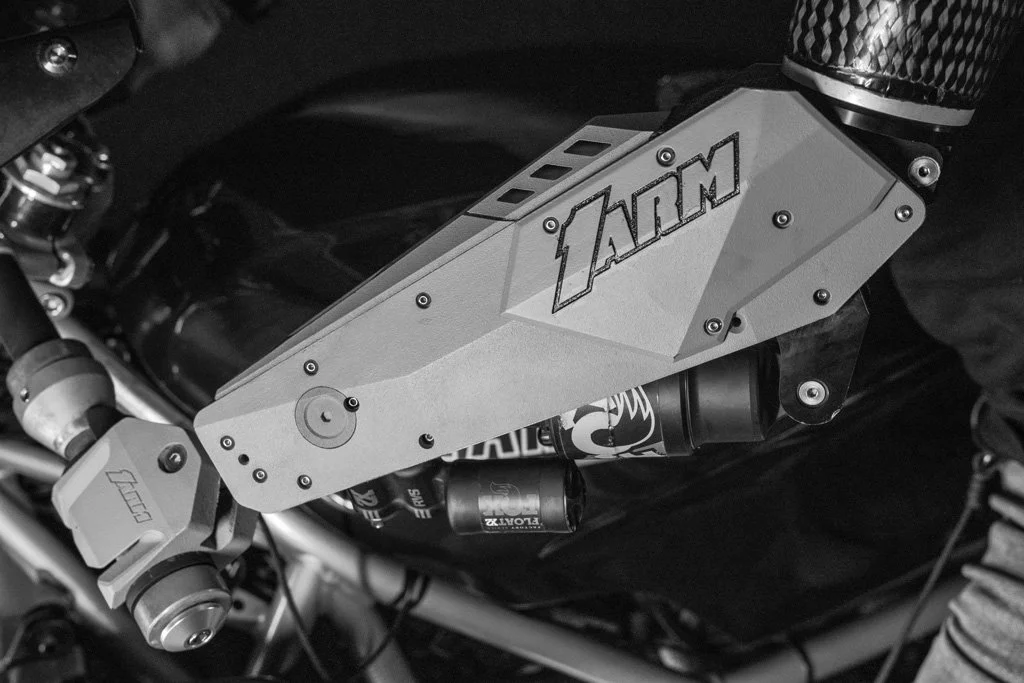
Another important development was the removable outer shell.
For the first time, I could separate the arm's mechanical function from its appearance, opening up opportunities to change the styling without redesigning the entire assembly.
Version 2.5 was where the project really began to resemble the arm I'd imagined.
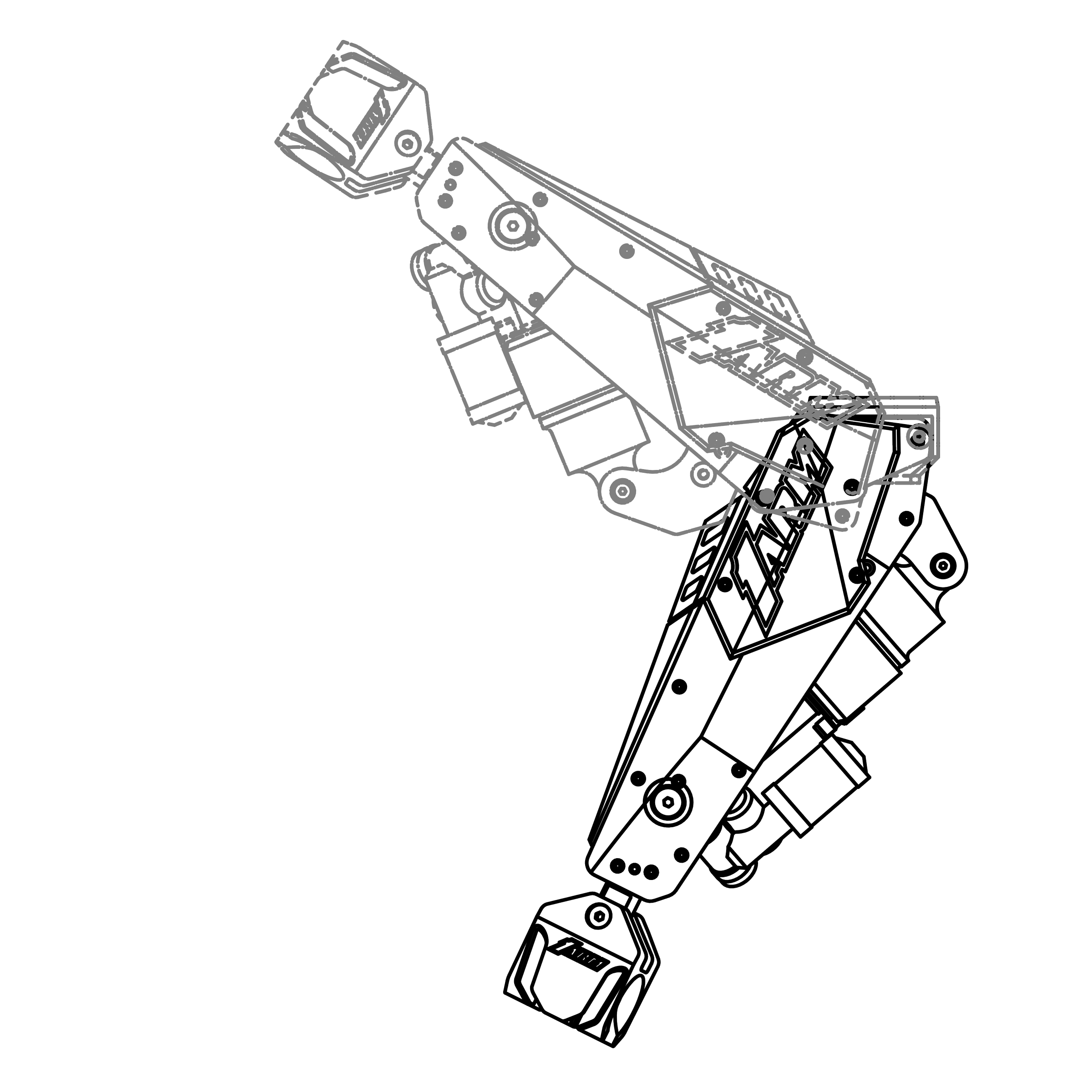
version 3.0
Refinement
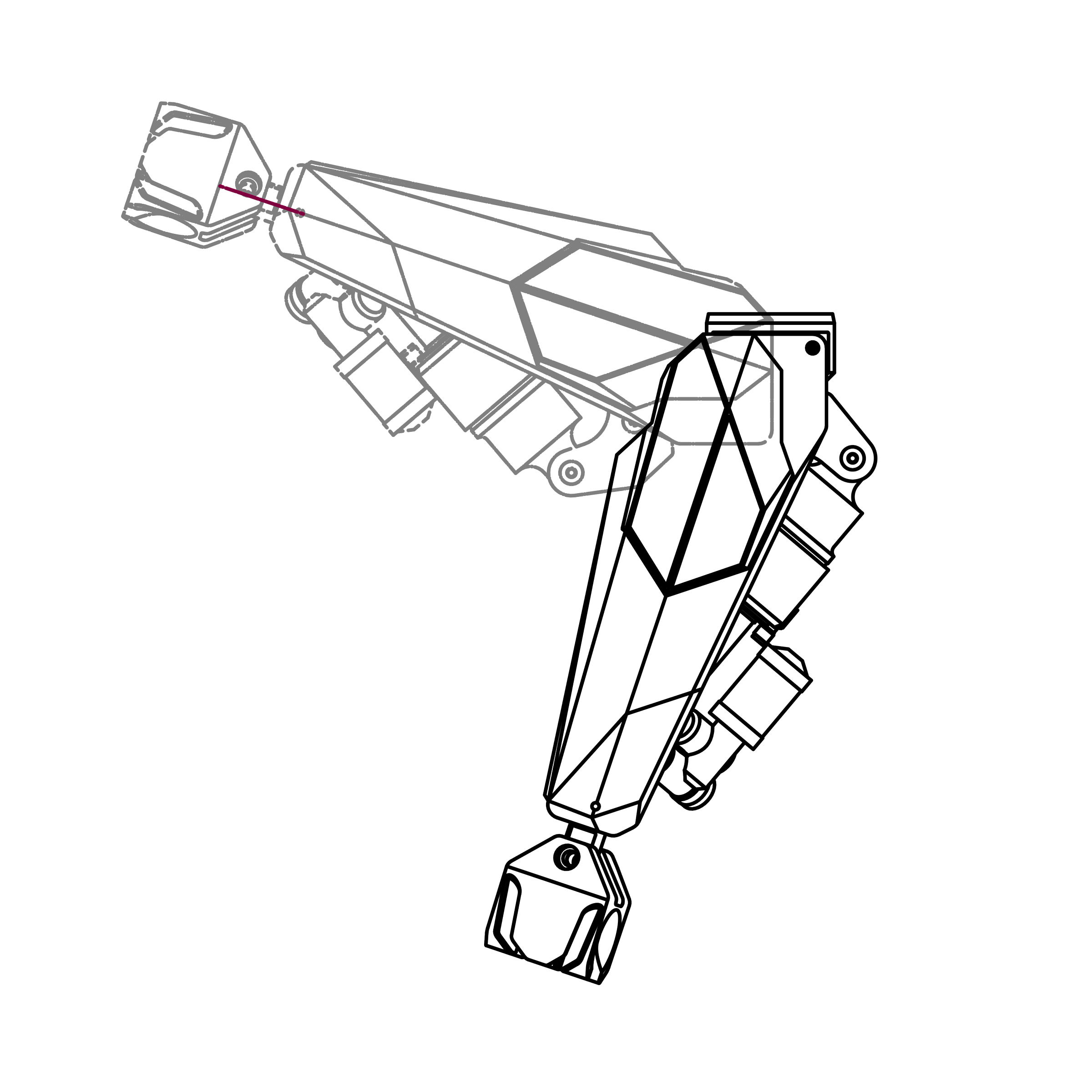
The current arm builds on the mechanical foundation established in Version 2.5.
Rather than completely redesigning a system that was working well, I've concentrated on improving individual components, refining movement, reducing unnecessary complexity and making the assembly more practical to maintain.
Advances in 3D-printing materials and manufacturing methods have played an important role.
The current design incorporates a combination of manufactured mechanical components and 3D-printed parts, including a removable nylon outer shell.
The shell protects the internal components, provides a cleaner appearance and helps reduce unwanted contact damage to the motorcycle.
I've also continued refining the hand interface and wrist movement.
The result is an arm that feels more natural to use, requires less effort and has proven itself across a variety of riding conditions.
It's the best version I've built so far.
But I certainly don't consider it the last.
My Design Philosophy
I approach the arm much like any other mechanical design project.
Understand the problem, establish what the design needs to achieve, develop a practical solution, test it and improve it.
There are a few principles I've tried to maintain throughout the project.
Keep it mechanical where practical.
I've deliberately avoided introducing electronics or complex control systems without a clear reason.
That's not because I'm opposed to them. It's because the mechanical approach has provided the functionality I need without adding unnecessary complexity.
If electronic control offered a meaningful improvement in the future, I'd certainly consider it.
Make it serviceable.
I want to be able to inspect, maintain and repair the equipment myself.
Components wear, materials fatigue and mechanical systems require attention. Accessibility and maintenance are important considerations in the design.
Use technology where it makes sense.
3D printing has transformed the way I develop the arm.
Earlier versions relied heavily on machined components, which made experimentation expensive.
Modern materials and printing methods allow me to develop and evaluate design changes much more economically.
Not everything needs to be 3D printed, though. Material selection and manufacturing methods still need to suit the demands of the component.
Function comes first, but appearance matters too.
I spend a lot of time designing and building things, and I appreciate good engineering.
I also like things that look good.
The removable outer shell gives me the opportunity to experiment with the appearance of the arm without fundamentally changing its mechanical function.
I haven't explored that nearly as much as I'd like.
Yet.
How It Performs
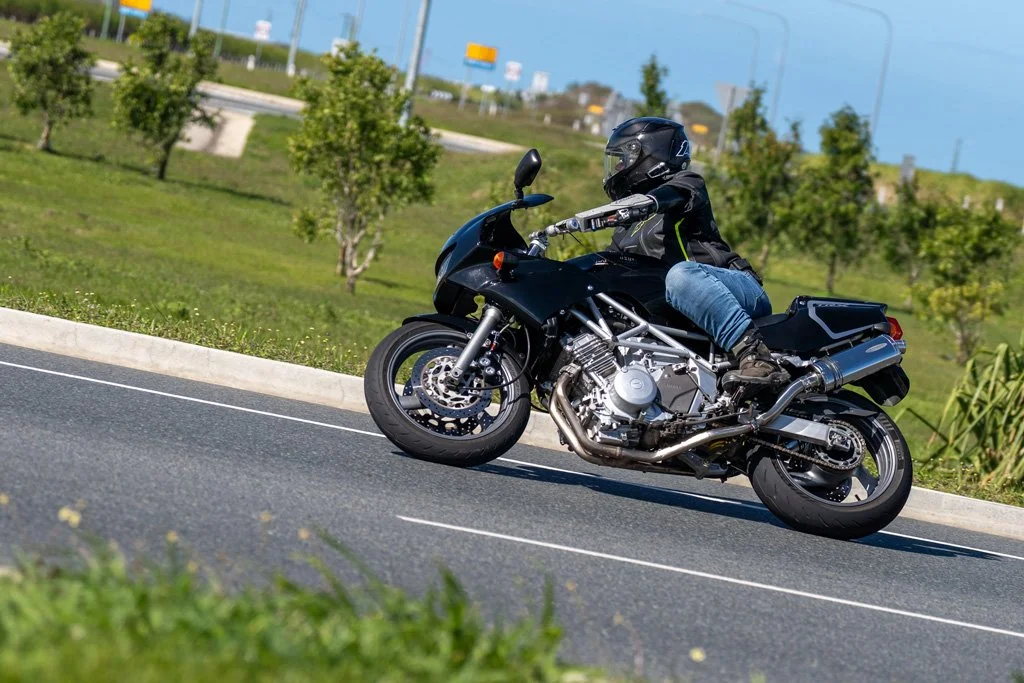
One of the things I'm particularly pleased with is the range of riding situations in which I can use the arm.
My motorcycles have been modified to accommodate my physical requirements, and the prosthesis works as part of that overall setup.
I've used it for everyday road riding, longer trips, slow-speed manoeuvres and track days.
Those activities place different demands on the rider and equipment.
Slow-speed riding requires precise control, balance and coordination. Braking and cornering introduce different forces and movements, while longer rides highlight issues such as comfort, fatigue and riding position.
The arm's mechanical behaviour is designed around the movement and strength I have available through my shoulder.
Getting that relationship right has been one of the most interesting aspects of the project.
The goal isn't to reproduce every movement of a natural arm. It's to provide the movement and support I need to operate the motorcycle comfortably and predictably.
And importantly, the arm doesn't do the riding for me.
I still need to develop and maintain the same fundamental riding skills as anyone else.
The equipment simply allows me to apply those skills in a way that works with my disability.
Safety and Responsibility
Safety has been a major consideration throughout the development of the arm, particularly the connection between the prosthesis and the motorcycle.
A mechanical system used in this environment must contend with vibration, changing loads, movement, weather, wear and the possibility of an accident.
One of the most challenging parts of the project has been developing the hand interface and its release behaviour.
Early designs taught me some valuable lessons, occasionally in ways I'd prefer not to repeat.
The current system incorporates a release mechanism developed and refined through multiple design iterations and practical use.
I've also experienced an accident while using the equipment, which provided some useful information about its behaviour under those particular circumstances.
That doesn't mean the system is guaranteed to perform the same way in every accident, or that it's suitable for anyone else.
No mechanical design is immune to failure, and real-world experience isn't a substitute for formal testing and independent validation.
My arm is a personal engineering solution, developed around my own physical capabilities and riding requirements.
It's not a certified commercial prosthetic system, and I'm not presenting it as something other riders should copy.
Anyone considering adaptive riding equipment should seek appropriate professional advice and have their individual requirements carefully assessed.
What I'm Happy to Share — And What I'm Not
I'm happy to discuss the development of the arm, the engineering challenges, the design philosophy and the lessons I've learned along the way.
That's a big part of why I've created this website.
However, there are some technical details I deliberately keep private.
These include detailed CAD models, manufacturing drawings, dimensions and the internal design of certain safety-critical mechanisms.
There are two reasons for that.
Firstly, the arm has been developed specifically for me. Providing detailed information without the necessary engineering, clinical and practical context could encourage someone to reproduce a system that isn't appropriate for their circumstances.
Secondly, some aspects of the design may have potential for further development in the future, and I'd prefer to retain control over that intellectual property.
I'm more than happy to explain the thinking behind the project without publishing every detail of how it works.
Where to From Here?
The arm has come a long way from its original design, but I don't consider it a finished project.
There are still improvements I'd like to make, ideas I'd like to explore and challenges I'd enjoy tackling.
I've also wondered whether some of what I've developed could eventually benefit other amputees who want to return to motorcycling.
Turning a personal engineering project into a commercially available product would be a significant undertaking, involving further development, testing, specialist expertise and resources.
It's something I'd be interested in exploring if the right opportunity came along.
For now, I'm happy continuing to refine what I've built, enjoy the freedom it gives me and see where things go.
And if someone sees potential in taking the project further, I'm always open to a conversation.
What I Hope People Take From This
When I first started working on the arm, I would have appreciated seeing more examples of people developing their own solutions to similar challenges.
Not necessarily to copy their designs, but to understand how they approached the problems and what they'd learned.
That's one of the reasons I share this project.
For engineers and designers, I hope it's an interesting example of practical problem-solving and iterative development.
For motorcyclists, perhaps it offers a different perspective on the relationship between the rider, the motorcycle and the equipment we rely on.
And for someone living with a disability, I hope it demonstrates that there may be ways to adapt the things they enjoy, even when the solutions aren't immediately obvious.
I'm proud of what I've designed and built.
It took a lot of time, effort, money, mistakes and persistence to get here.
But I don't see the arm as some extraordinary piece of technology that deserves admiration simply because it exists.
I see it as a practical solution to a problem I wanted to solve, developed with the skills and resources I had available.
And perhaps that's the part I find most satisfying.
I wanted to ride motorcycles again. So I found a way.
Everything since has been about making that solution better.