
10 Questions About Riding Motorcycles With One Arm
I get a lot of questions about riding with one arm, so I’ve answered the common ones here. It’s not advice — just how I’ve made it work and what I’ve learned about staying safe on the road.
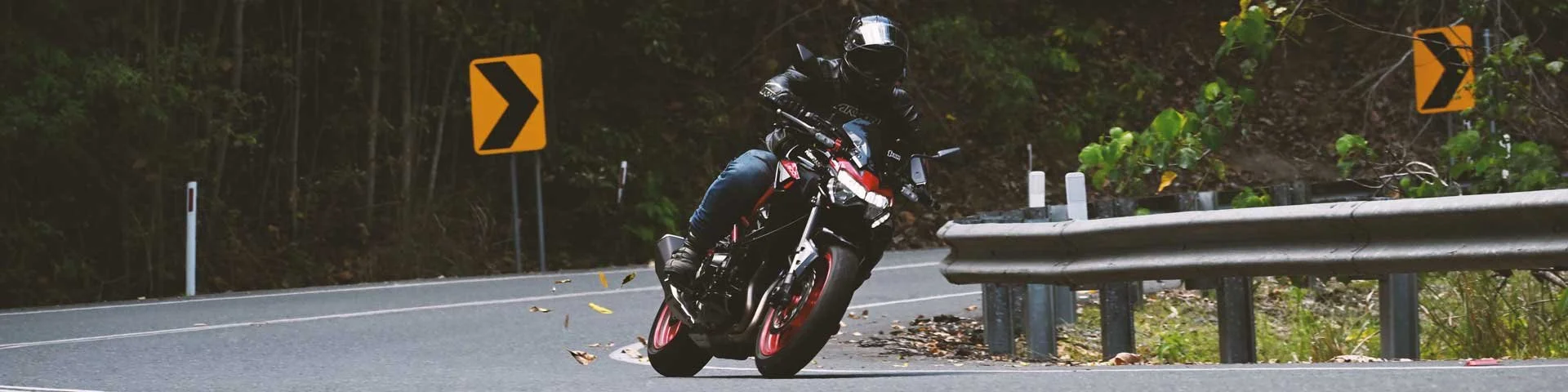
When people find out I’m out there riding motorcycles with one arm, the questions come thick and fast — and honestly, they’re good questions. Riders, new amputees, curious onlookers… everyone wants to know how it works, what’s possible, and what it actually feels like. So I’ve put together answers to the most common questions people ask me about riding with one arm, based entirely on my own experience and how I’ve learned to make it work. Expect a long learning curve with a few bumps along the way, but do everything you can to tackle this from a safety perspective. Bikes are fun, and it's easy to disregard safety to keep your passion alive, so surround yourself with the right people — the people who are happy to see you back on two wheels for the long run.
If you're thinking about riding with one arm, or you're curious about how I've approached it, I've written a few articles that explore the subject in more detail.
What Makes a Motorcycle Good for One-Arm Riders? — My thoughts on what makes a motorcycle suitable, based on my own experience.
My Approach to Bikes: Want It, Buy It, Adapt It — Why I prefer adapting motorcycles I actually want to ride rather than limiting myself to what's easiest.
The Learning Curve: Your Brain's First Time Back on the Bike — Some of the mental challenges involved in getting back on a motorcycle after losing an arm.
1 - Can you ride a motorcycle with one arm?
Yes, riding a motorcycle with one arm is certainly possible. I've been doing it for years, although getting back on a bike involved a great deal more than simply figuring out how to operate it.
Losing an arm changes things, and getting back on a motorcycle isn't simply a matter of finding a suitable bike or working out how to operate the controls. Your physical recovery, rehabilitation, confidence, riding experience and the equipment you use all deserve careful consideration. There are also medical, licensing and legal requirements to investigate.
I'd encourage anyone considering returning to riding to be patient with themselves and approach the process one step at a time. Ask questions, seek appropriate professional guidance, experiment carefully where it's safe to do so, and be prepared for setbacks. What works for one amputee won't necessarily work for another.
I'd also encourage you to think about why you want to ride again, what you enjoy about motorcycling, and the kind of rider you want to be. If you've been injured in a motorcycle accident, take the opportunity to reflect on what happened, your previous riding habits and the influences that shaped your decisions. Even if your amputation had nothing to do with motorcycling, your attitudes towards risk and responsibility still matter.
I love motorcycles, and I understand how powerful the desire to ride can be. I wouldn't want to discourage anyone from exploring that possibility. But I would encourage you to approach it with realistic expectations, patience and a healthy respect for the risks involved.
The goal isn't simply to get back on a motorcycle. It's to develop the skills, judgement and confidence to enjoy riding responsibly, and to keep learning long after you've returned.
2 - How do you modify a motorcycle for an arm amputee?
I believe that most motorcycles have the potential to be adapted for a rider with one arm. Some will present greater engineering challenges than others, but I've never been particularly interested in accepting that something can't be done simply because the solution isn't immediately obvious.
Motorcycles are more than practical transport for many of us. We choose them because of how they look, sound, feel and ride, and sometimes because of the memories attached to them. I don't believe losing an arm should automatically mean giving up the motorcycle you love in favour of something that's simply easier to modify.
My approach has always been to start with the simplest possible solution and work from there. Over the years, I've learned that making a modification function is only part of the challenge. It also needs to be reliable, intuitive to operate, appropriate for the individual rider and capable of meeting the relevant safety and legal requirements.
One of my highest priorities is reversibility. Wherever practical, I avoid permanently altering original motorcycle components, including frames and main wiring harnesses. I prefer modifications that retain factory functions and allow the motorcycle to be returned to its original configuration with minimal cost, damage or effort.
I've also learned to avoid unnecessary departures from familiar control arrangements. Some of my earlier modifications worked perfectly well, but were awkward when moving between different motorcycles. Experience taught me that a good adaptation shouldn't introduce complexity where it isn't needed.
None of this means every motorcycle can be adapted successfully for every rider. Individual capabilities, engineering limitations, cost and approval requirements all need to be considered. Sometimes a different model year or an alternative approach may offer a more practical solution.
But my starting point will always be to investigate how we can make the motorcycle you want work for you, rather than immediately telling you to choose something else.
3 - Do you need a prosthetic arm to ride a motorcycle?
No, not necessarily. There are arm amputees who ride motorcycles without using a prosthetic, and I respect their decision to do so. Every rider has different circumstances, abilities and preferences, and ultimately it's their choice how they approach riding.
However, I have a very strong personal belief that a properly designed and fitted riding prosthetic can offer significant advantages in motorcycle control and safety, particularly on public roads.
Motorcycling isn't simply about travelling in a straight line or negotiating sweeping corners. Public roads are unpredictable. We encounter uneven surfaces, tight manoeuvres, sudden braking, unexpected obstacles and other road users who don't always behave as we'd expect.
When something goes wrong, I want the greatest practical amount of safe control over my motorcycle.
My riding arm provides additional stability during sudden changes in speed or direction. It helps distribute physical loads across my body, rather than relying entirely on my remaining arm, and gives me another point of input and feedback from the motorcycle.
Those advantages are particularly important to me during low-speed manoeuvres, emergency braking and situations where I need to react quickly.
I've spent years developing and refining my riding arm, and that experience has reinforced my belief in the benefits of riding with a suitable prosthetic. But not all prosthetics are designed for motorcycle use, and simply wearing one doesn't automatically make riding safer.
Fit, comfort, movement, reliability and how the prosthetic behaves in an accident are all important considerations. I've had a significant motorcycle accident while wearing mine, and its quick-release system operated as intended. Thankfully, I didn't suffer an injury directly caused by the prosthetic. That experience reinforced the importance of considering what happens during a crash, not just during normal riding.
There are also practical considerations. A suitable prosthetic may be expensive, uncomfortable if poorly fitted, or simply unavailable to some riders.
I'm not interested in telling another amputee how they must ride, or challenging someone to prove they can manage without a prosthetic. I can only explain what I've learned through my own riding and engineering experience.
And my position is this: being able to ride a motorcycle and having the greatest practical margin of control when something unexpected happens are not necessarily the same thing.
For me, a properly designed riding prosthetic is an important part of achieving that margin of control. It's an approach I strongly believe in, particularly for riding on public roads.
Whatever approach you choose, I'd encourage you to consider the full range of situations you might encounter, seek appropriate professional advice, and make safety and control your priorities.
4 - How do you steer or countersteer with one arm?
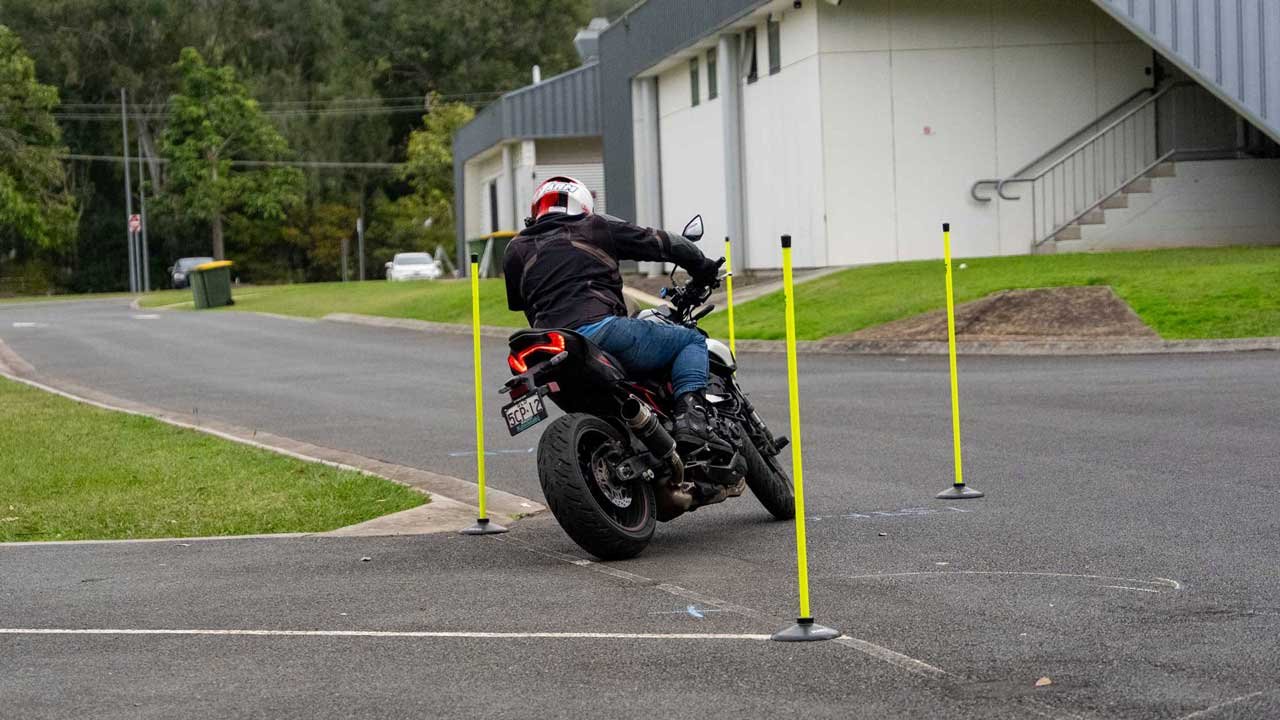
Countersteering works the same way regardless of how many arms you have. To initiate a turn, you apply a steering input at the handlebars. For example, pushing forward on the left handlebar initiates a lean to the left, allowing the motorcycle to turn.
You don't necessarily need two arms to achieve this, but having a properly designed riding prosthetic gives me another means of applying steering inputs and controlling the motorcycle.
My riding arm isn't simply there to provide balance or support. I actively use it to steer, manage my body position and transfer forces between myself and the motorcycle.
In fact, during my early years of riding with the prosthetic, I occasionally experienced discomfort where my residual limb pressed against a retaining bolt inside the socket. It was a practical reminder of just how much physical effort I was transferring through the arm, particularly during cornering and braking.
Applying a forward push through the prosthetic is relatively straightforward. What initially required more practice was coordinating my body movements with the prosthetic elbow.
In the early days, I consciously practised bending the elbow and moving my upper body through corners. With experience, those movements gradually became natural. These days, I rarely think about them.
My particular prosthetic does have some limitations. Because of my nerve injury and reduced muscle function, I've chosen to restrict rotation at the wrist. That can make certain extreme body positions uncomfortable, particularly during track riding or when attempting a full aerodynamic tuck.
For ordinary road riding, however, I don't notice any meaningful difference between left and right turns.
One important lesson I've learned is that the fit and alignment of the prosthetic are critical. Even a small change in how the socket sits on my residual limb can make the motorcycle feel noticeably different.
Ultimately, steering a motorcycle with one arm isn't about inventing a new way to countersteer. The principles of motorcycle steering remain the same. The challenge is finding a suitable way to apply those inputs, maintain control and develop the coordination needed to make everything work together.
For me, that has come through a combination of engineering, experimentation and a great deal of practice.
5 - How do you brake and clutch with one hand?
On my motorcycles, I've added a second clutch lever to the right handlebar, positioned beneath the original front brake lever.
I sometimes describe my right hand as two hands sharing a thumb!
The arrangement allows me to operate the front brake, clutch and throttle using different combinations of fingers, depending on what I'm doing.
But getting everything positioned correctly has taken years of experimentation.
My highest priority has always been the front brake. I retain the factory brake lever and position it for comfortable, effective operation. The clutch lever must fit around that arrangement without interfering with braking, catching on my glove or creating confusion between the controls.
Finding the right clutch lever has been a surprisingly long journey. Its shape, length, position and relationship to the brake lever all matter. I've experimented with numerous levers across different motorcycles to achieve an arrangement that feels natural and operates reliably.
My motorcycles also retain their original factory clutch levers and functionality. This is part of my approach to keeping modifications reversible.
So how do I actually operate everything?
The answer depends on what I'm doing.
During normal upshifts, I use all four fingers to operate the clutch. For downshifts, I generally use a clutchless, rev-matched technique.
At low speeds, I use my index and middle fingers to control the clutch while my remaining fingers manage the throttle. This allows me to control the clutch's friction zone precisely while manoeuvring through car parks, negotiating tight turns or riding slowly.
When coming to a stop, including during emergency braking, I generally use my index finger on the front brake while my remaining fingers operate the clutch.
On the track, I typically use my index and middle fingers for braking and don't use the clutch for upshifts or downshifts.
I also practise four-finger emergency braking. In my own informal testing, I haven't observed a meaningful stopping-performance advantage over my two-finger technique, although that testing wasn't conducted under controlled conditions. With all four fingers on the brake, I can't simultaneously operate the clutch, so the engine stalls as the motorcycle comes to a stop.
These are techniques I've developed for my own motorcycles and control arrangements, not instructions I'd recommend another rider simply copy.
The mechanical modifications are only half the story. Learning to coordinate the controls has required considerable practice, and I've continued refining both the hardware and my riding technique over the years.
Ultimately, the goal isn't simply to fit a clutch lever beside the throttle. It's to create an arrangement that allows deliberate, reliable control of the motorcycle without compromising the operation of the front brake.
6 - What bikes are easiest to ride with one arm?
That depends on the rider, their experience and the type of riding they want to do.
But if you're returning to motorcycling after losing an arm, my recommendation is to start with a relatively small, lightweight motorcycle with a comfortable, neutral riding position, a manageable clutch and predictable power delivery.
Even if you were an experienced motorcyclist before your amputation, there's something important to understand: you're going to have to learn how to ride again.
You'll already have plenty to concentrate on while adapting to different controls, developing new coordination and rebuilding your confidence. There's little benefit in making that process more complicated than it needs to be.
When I first returned to riding, I started with a motorcycle that had a fairly conventional riding position. Over the years, I've found that motorcycles with an upright or neutral seating position generally allow me to use my legs, knees and body more effectively to support myself and control the bike.
I'm personally not a fan of cruiser-style motorcycles with forward foot controls or high handlebars, particularly as learning platforms. I struggled with forward controls even before losing my arm! Those riding positions can make it more difficult to brace yourself, move your body and manage the motorcycle during low-speed manoeuvres or braking.
That doesn't mean cruisers are unsuitable for every amputee. It's simply not where I'd recommend beginning the learning process.
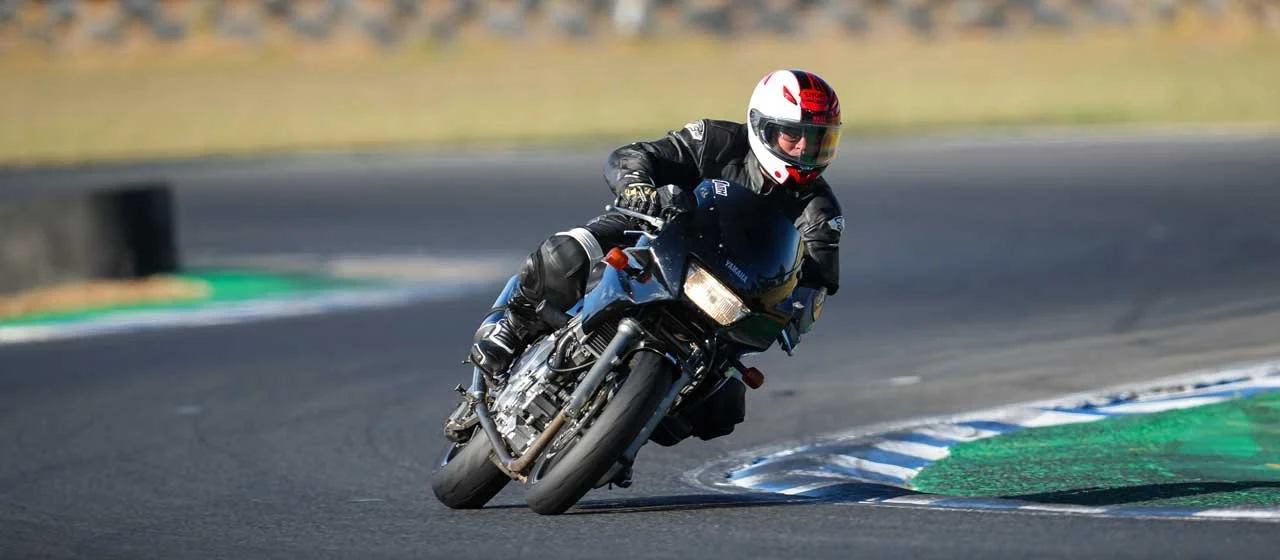
My Yamaha TRX850 is another good example. I love riding it, but its sporty riding position, heavy clutch and tall first gear make it considerably more demanding than some of my other motorcycles. It wouldn't be my first choice for someone learning to ride with one arm.
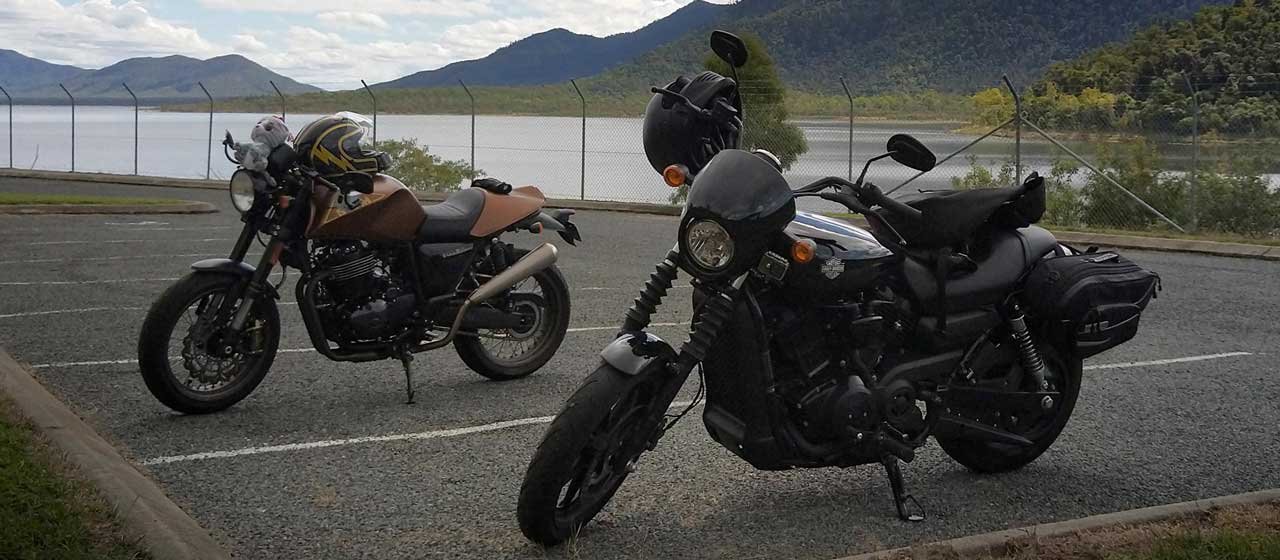
On the other hand, my SWM 440 was relatively light, inexpensive and easy to manage, with a comfortable riding position and light clutch. My Royal Enfield has also demonstrated many of the characteristics I consider helpful for building confidence and developing basic riding skills.
Neither motorcycle is necessarily the perfect choice for everyone. They're simply examples of what I've found works well.
And there's an important distinction I'd encourage you to consider.
The motorcycle you learn on doesn't have to be the motorcycle you ultimately want to ride.
If your dream is to get back onto your favourite sports bike, cruiser or touring motorcycle, that's a perfectly reasonable goal to work towards. But I'd encourage you to build your skills and confidence on something forgiving before taking on the additional challenges of a more demanding motorcycle.
Start simple. Give yourself room to make mistakes, practise and improve. Develop genuine confidence through competence, rather than expecting your previous riding experience to carry you through.
You've already got enough to learn without making the motorcycle itself another unnecessary obstacle.
7 - Is a trike or Can‑Am better for one‑arm riders?
That really comes down to personal preference, individual ability and what you want to get out of riding.
A three-wheeled motorcycle or Can-Am could be an excellent option for someone who isn't comfortable returning to two wheels, or who finds the balance and control demands of a conventional motorcycle difficult to manage.
One obvious advantage is that certain three-wheeled designs don't require the rider to balance the machine when stationary. For someone rebuilding their confidence after an amputation, that could be a significant benefit.
However, three wheels don't automatically make a vehicle safer. Trikes and Can-Am machines have different steering and handling characteristics from conventional motorcycles, and riders still need to develop the skills to operate them safely.
I haven't personally ridden a trike or Can-Am since losing my arm, so I can't offer a direct comparison based on my own riding experience. I'd certainly be interested in trying one, though!
I also can't comment confidently on every model's standard control arrangement or how easily it could be adapted. That's something I'd want to investigate properly before making recommendations.
When I first started exploring how to return to motorcycling, several people suggested I consider a trike instead.
But that wasn't what I wanted.
I'd spent my life riding motorcycles on two wheels, and that's what I was determined to get back to. The experience of balancing, leaning and controlling a two-wheeled motorcycle is deeply ingrained in me. I wasn't ready to give that up without exploring every reasonable possibility.
At the time, choosing three wheels felt like taking an easier path rather than pursuing the challenge I'd set myself. Looking back, I recognise that was about my own ambitions and preferences, not a judgement about what anyone else should ride.
I'm not interested in policing another rider's choices.
If someone feels more comfortable on a trike or Can-Am, enjoys riding it and can operate it safely, that's a perfectly valid choice.
My advice would be to explore the options, understand the differences in handling and controls, and seek appropriate training and assessment.
The important thing isn't whether your motorcycle has two wheels or three. It's whether the machine suits your abilities, allows you to ride safely and gives you the enjoyment you're looking for.
For me, that happens to mean two wheels. For someone else, three might be exactly right.
8 - How do you keep a prosthetic hand on the handlebars?
My riding arm uses a quick-release connection between the prosthetic hand and the motorcycle's handlebar.
It might sound like a simple arrangement, but developing a connection that works properly for motorcycle riding involves considerably more than making sure the hand stays attached.
The connection needs to be secure enough to allow me to actively push and pull on the handlebars, support my body and maintain control of the motorcycle.
At the same time, the hand and wrist need sufficient freedom of movement to accommodate changes in riding position, steering inputs and body movement.
I've found that some resistance within the joints is also important. I don't want everything rigid, but I certainly don't want the hand flopping around loosely either. The movement needs to feel natural, predictable and controlled.
Then there's the question of what happens during an accident.
This is one of the most important considerations in my design.
I don't want the prosthetic disconnecting unexpectedly while I'm still attempting to control the motorcycle. Equally, I don't want to remain attached to the handlebars if the motorcycle and I are going our separate ways!
My quick-release mechanism is adjustable and designed to separate under particular loads, regardless of the hand's position relative to the handlebars.
I've spent years developing and refining this arrangement, and I have considerable confidence in how it performs.
I've also had one significant motorcycle accident while wearing the arm. The quick-release operated, and I didn't experience an injury directly transferred through the prosthetic. That was reassuring, although one successful release doesn't guarantee the same outcome in every possible accident.
I've seen numerous approaches to connecting prosthetic arms to motorcycle handlebars. Some are remarkably complicated, while others appear to have been adapted from applications that don't necessarily involve the same demands as motorcycle riding.
Every approach has its advantages and limitations, including mine.
My preference has always been for a simple, reliable and adjustable arrangement that provides natural movement, useful feedback and an appropriate means of disconnection.
There's also a practical side to my design. The quick-release clip is inexpensive to replace, and I always carry a spare. I've actually broken a couple by accidentally standing on the tether after getting off the motorcycle!
Ultimately, the important question isn't simply how to keep a prosthetic hand attached to the handlebars.
It's how to maintain a useful, controlled connection during riding while also considering what needs to happen if things go wrong.
That's the challenge I've spent years working on, and it's one I believe deserves very careful consideration in any motorcycle-specific prosthetic design.
9 - How do you shift gears with one arm?
On my motorcycles, upshifting is fairly conventional. I roll off the throttle, pull in the clutch using the additional lever on my right handlebar, change gear, release the clutch and continue riding.
Downshifting is a little different.
I generally downshift without using the clutch, using a technique known as clutchless rev-matching.
This involves applying light pressure to the gear lever and briefly increasing engine speed with the throttle to match the lower gear, allowing the gear change to occur smoothly.
Why do I do it this way?
Because maintaining effective control of the front brake is more important to me than operating the clutch during a downshift.
With my clutch and front brake levers both on the right handlebar, clutchless downshifting allows me to concentrate on braking without having to operate both levers simultaneously.
This wasn't a technique I invented after losing my arm.
Before my accident, I'd occasionally needed to ride motorcycles home with failed clutch systems. I was also a motorcycle mechanic, so I already had a good understanding of how motorcycle gearboxes operate and what makes a gear change mechanically smooth.
That knowledge became particularly useful when I started riding with one arm.
I've now covered a considerable number of kilometres using this technique, averaging around 30,000 km of riding per year across both older and newer motorcycles. I've found that with good technique, clutchless downshifting can work very well.
However, there's an important distinction between a smooth, properly timed gear change and simply forcing a motorcycle into gear.
Poor timing or incorrect engine speed can place unnecessary loads on the drivetrain, produce abrupt changes in rear-wheel behaviour or potentially damage components. Not every motorcycle or gearbox will respond identically.
Practice, mechanical understanding and familiarity with the motorcycle make a considerable difference.
I wouldn't suggest that someone returning to riding after an amputation should immediately start experimenting with clutchless downshifts. There are other control arrangements and shifting aids worth considering, depending on the motorcycle and rider.
For me, though, this approach has proven practical and reliable over many years.
As with my other motorcycle modifications and riding techniques, the objective is straightforward: make the controls work around the safe operation of the motorcycle, rather than compromising motorcycle control to accommodate the controls.
10 - Is it safe to ride a motorcycle with one arm?
Yes, I believe it's possible to ride a motorcycle safely with one arm, provided the rider has the physical capability, suitable equipment, appropriate training and the right attitude.
And of those things, I believe attitude is one of the most important.
You can have two perfectly functioning arms, excellent riding skills and all the confidence in the world, yet still be a dangerous motorcyclist if your attitude towards risk and personal responsibility is poor.
Likewise, having one arm doesn't automatically make someone an unsafe rider.
I lost my left arm in a motorcycle accident in 1998, but I didn't return to riding until 2018, following a twenty-year break.
Getting back on a motorcycle meant developing my prosthetic, adapting motorcycles and learning how to ride effectively with one arm.
These days, I average around 25,000–30,000 kilometres of riding per year.
But here's something I feel strongly about:
Time on the motorcycle isn't the same as practice.
You can ride thousands of kilometres every year and still neglect important skills.
I regularly practise low-speed manoeuvres and make a point of practising emergency braking at least once a week, in a suitable environment.
Why? Because I don't believe riding experience makes anyone immune to mistakes, complacency or unexpected situations.
And because there's always something I can improve.
Motorcycling carries risks, regardless of how many arms you have. Having a physical disability may introduce additional challenges that need to be properly understood and addressed. Some people may need specialised equipment, modifications or training, and not every solution will suit every rider.
But I don't believe the number of arms a rider has is the most useful measure of how safely they'll ride.
I'm far more interested in their judgement, their willingness to learn, their respect for their own limitations and the decisions they make when they're out on the road.
Confidence isn't competence, and experience isn't necessarily improvement.
Good judgement, deliberate practice and an honest understanding of your abilities can make a tremendous difference.
My advice to anyone considering riding after losing an arm is to take your time, find solutions that work for your circumstances, seek appropriate professional guidance and build your abilities progressively.
Don't let somebody else's confidence dictate your pace.
And don't confuse being able to operate a motorcycle with being ready to manage everything that riding on public roads can throw at you.
Above all, ride within your abilities, keep developing your skills and take responsibility for your decisions.
The goal isn't to prove that you can ride with one arm. It's to become a capable, responsible rider who happens to have one arm.