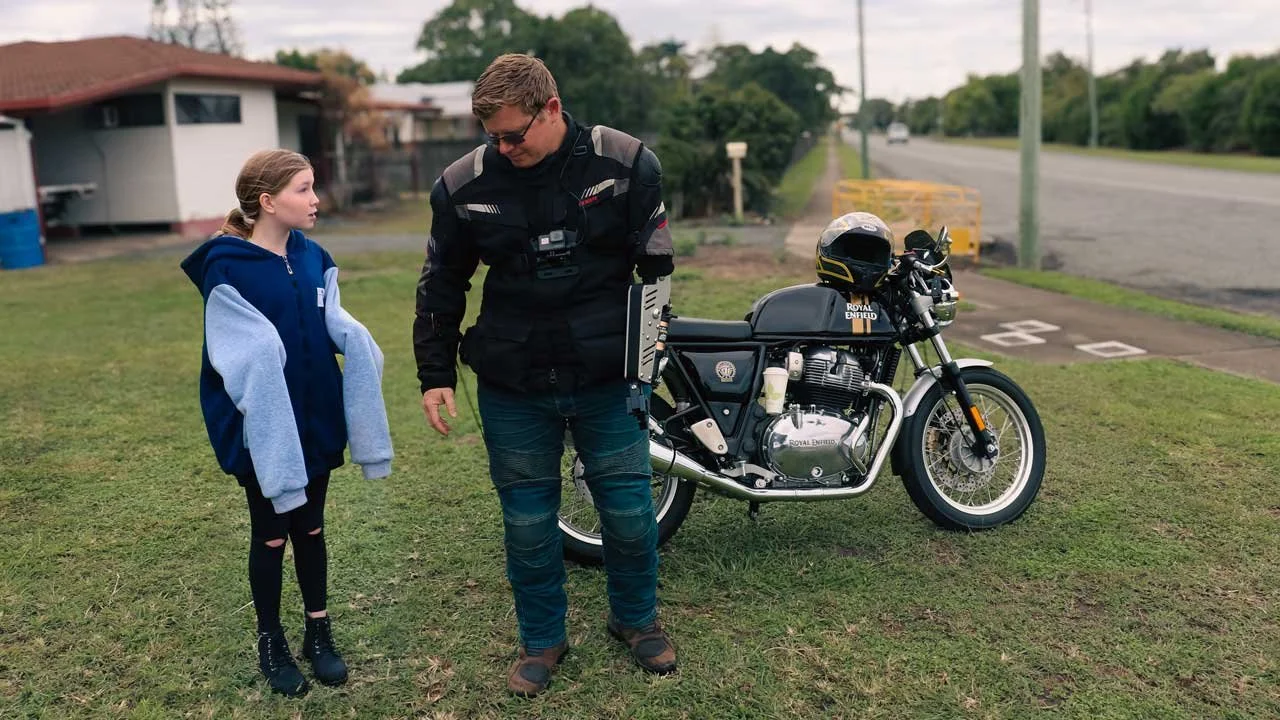
A prosthesis can connect you to something without letting you use it the way you want.
That was part of my experience returning to motorcycles. I wanted an arm that let me sit naturally, move on the bike and get useful feedback through the handlebars. Holding on was essential, but it wasn’t the whole job.
Getting there took a lot of design work, prototypes, specialist help and money. It also took being honest about the things I wasn’t happy with.
Knowing what I wanted
I looked online at riding prostheses and even contacted one manufacturer. By the time they replied, I’d already made my own.
That doesn’t mean I tried everything available. I didn’t. I had design skills, ideas I wanted to pursue and a fairly specific picture of what I wanted my arm to do.
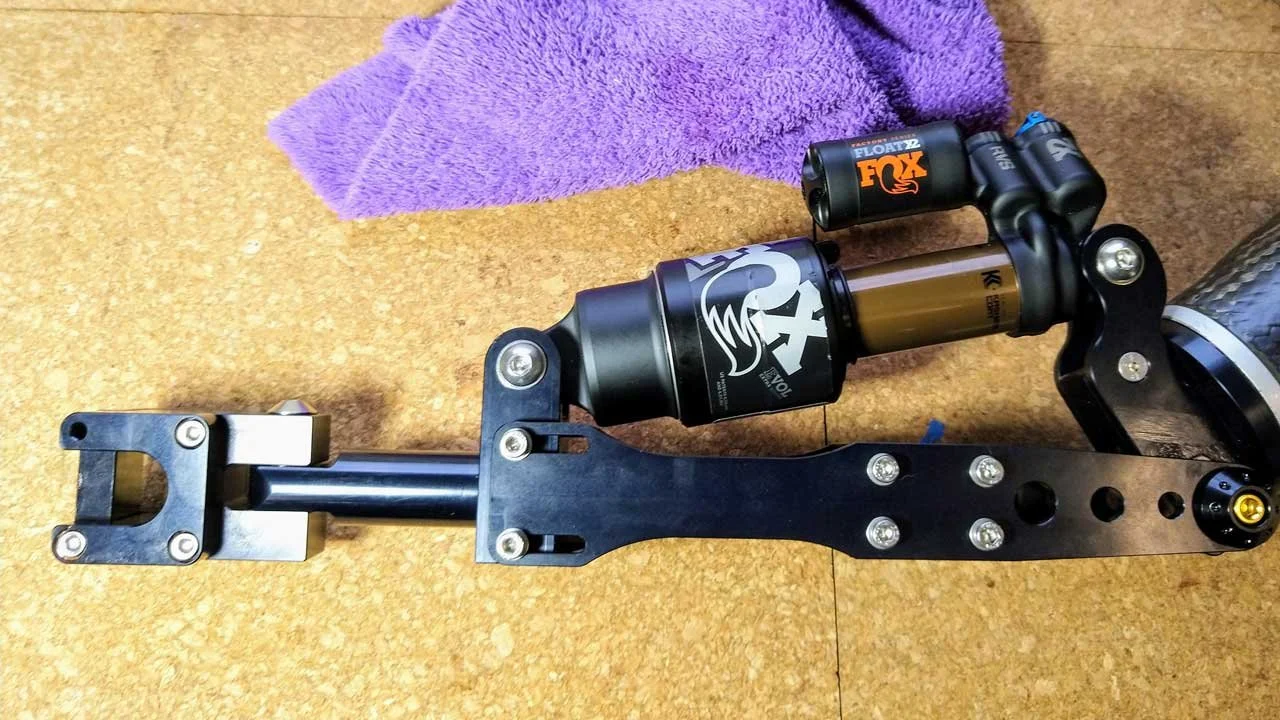
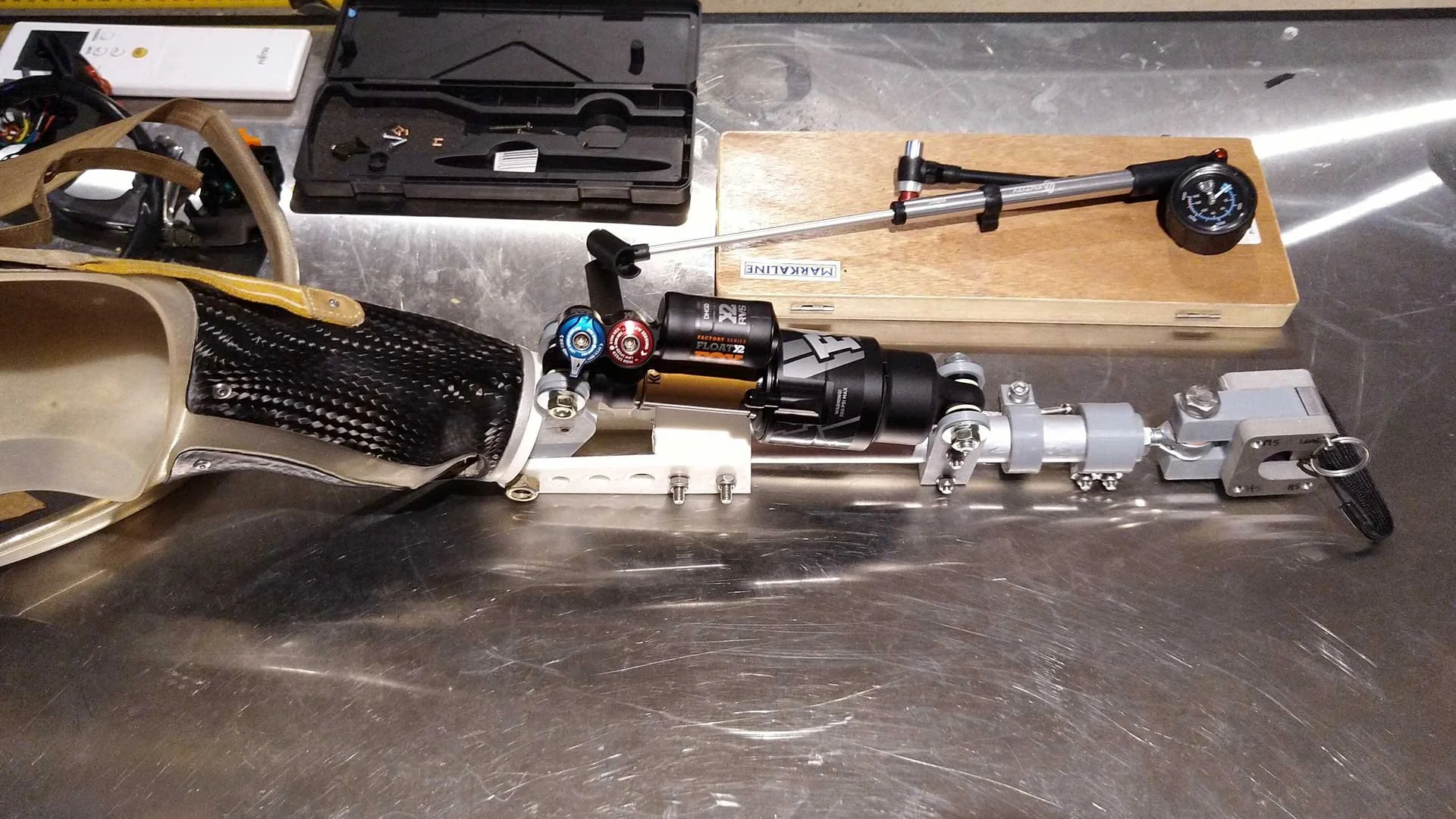
The mechanism for my current arm was there from the beginning. I made a 3D-printed assembly and tried its movement - no ride test at that stage; I was new to using 3D-printed parts “dynamically”. Only after my patience started to slip did I take to the yard with plastic arms and an angry dirt bike. That first test of the current mechanism felt promising, but turning it into a fabricated arm was expensive.
Time and budget meant my first working arm followed a more conventional arrangement, with less movement than I wanted.
It got me back on motorcycles and through roughly the first year. But I never felt completely comfortable with it.
I knew I wanted something different. I knew I had designs for something better.
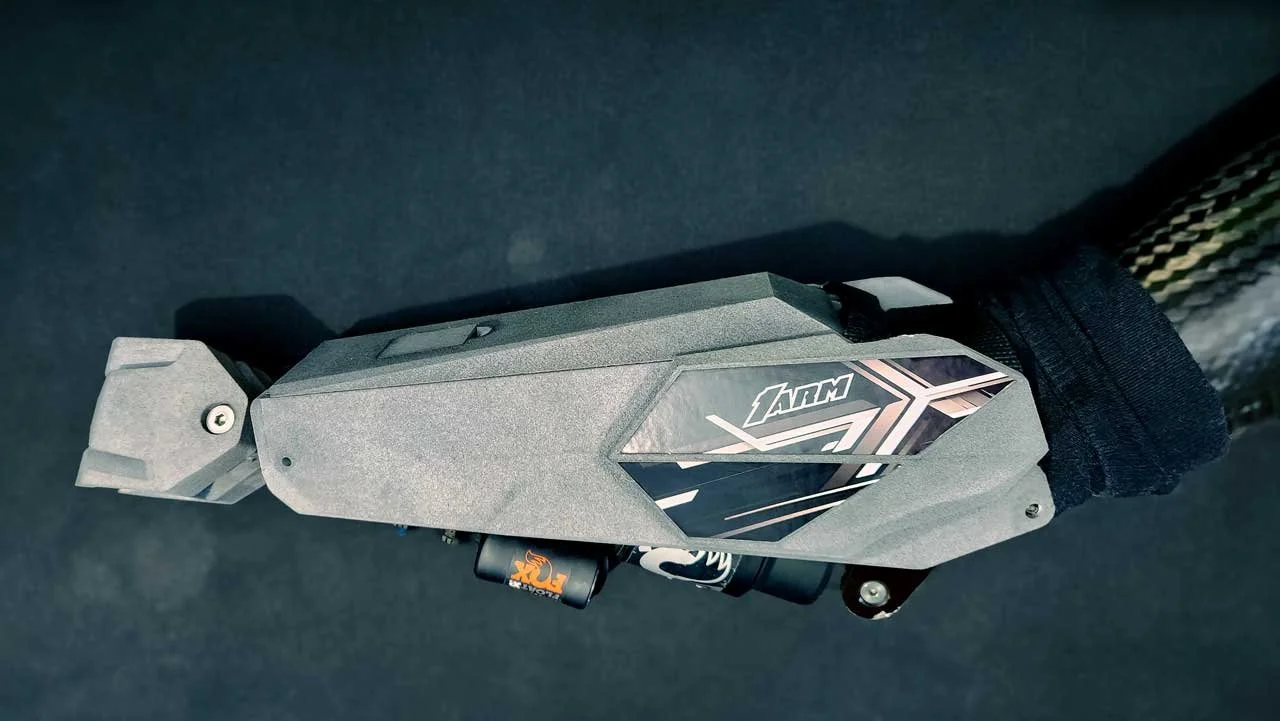
I also wanted something that looked cool, not like it was made in the shed (even though it kind of was).
Working out what “functional” meant
The hand was a project of its own.
I designed roughly 30 versions and printed around ten. The WR450 helped with testing and distributing skidmarks in my yard and in my pants. Nothing like having a 3D-printed prototype let go right as the 450 decided it wanted to GO.
My early attempts had some of the same shortcomings I’d been concerned about in existing designs: complexity, inadequate grip, and release behaviour I wasn’t satisfied with.
Then there was the feel.
A loose wrist left me feeling disconnected from the bike. My right arm felt like it was doing all the work. I needed support and resistance from the left side, as well as movement.
For me, a functional setup needed four things:
A secure grip with useful feedback through the wrist.
A reliable release mechanism with adjustable release force.
Enough elbow movement for the riding positions I wanted.
Movement that felt natural throughout its range.
Those requirements had to work together. Improving one thing wasn’t much use if it made something else awkward.
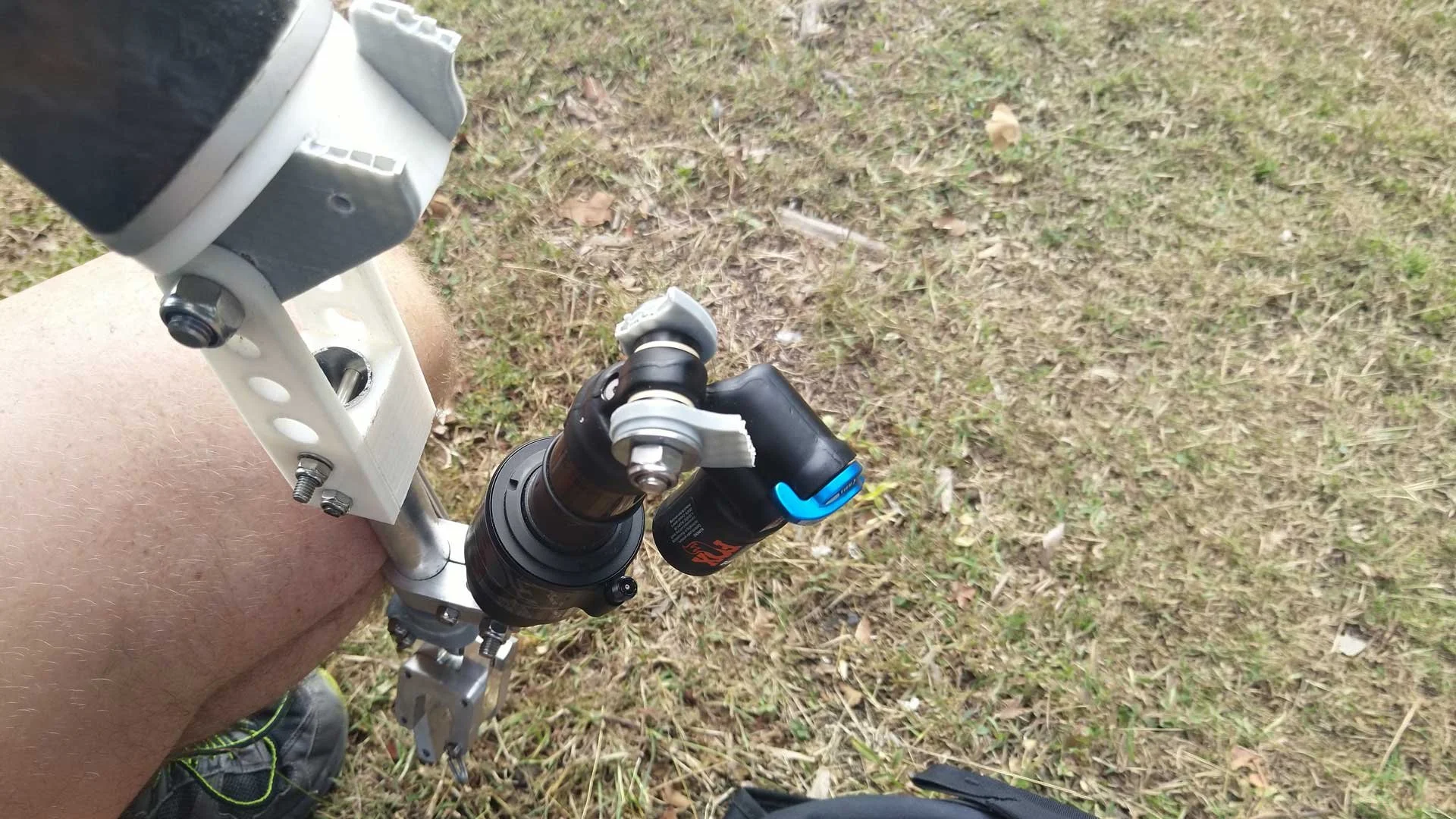
Some feedback is difficult to miss
My first working hand used a release arrangement connected to my right wrist.
On one ride, I moved my right hand to give another driver the finger. The movement triggered an unintended release of my prosthetic hand.
Apparently, expressing my opinion wasn’t in the design brief.
I was travelling at about 80 km/h and ended up reconnecting it while moving. It was hazardous, awkward and not something I’d recommend repeating.
I already disliked the compromises in that hand. The incident pushed me into some long nights in front of the computer, chasing a simpler, better design.
Looking back, I also doubt that early hand would have released reliably in a crash. I didn’t crash-test it, and I’m in no hurry to arrange that kind of test.
My current system has been through an actual crash. It let go as intended. Didn't prevent me from hitting the ground and breaking a few ribs, but I still count that as “testing complete”.
The best thing about my current design is “time to ride”… that time between putting thev “hand” on the bars and throwing a leg over the bike. The previous design had a “Jesus pin” and a tethered “key”. It was a bit fiddly to get going… wasting precious ride time.
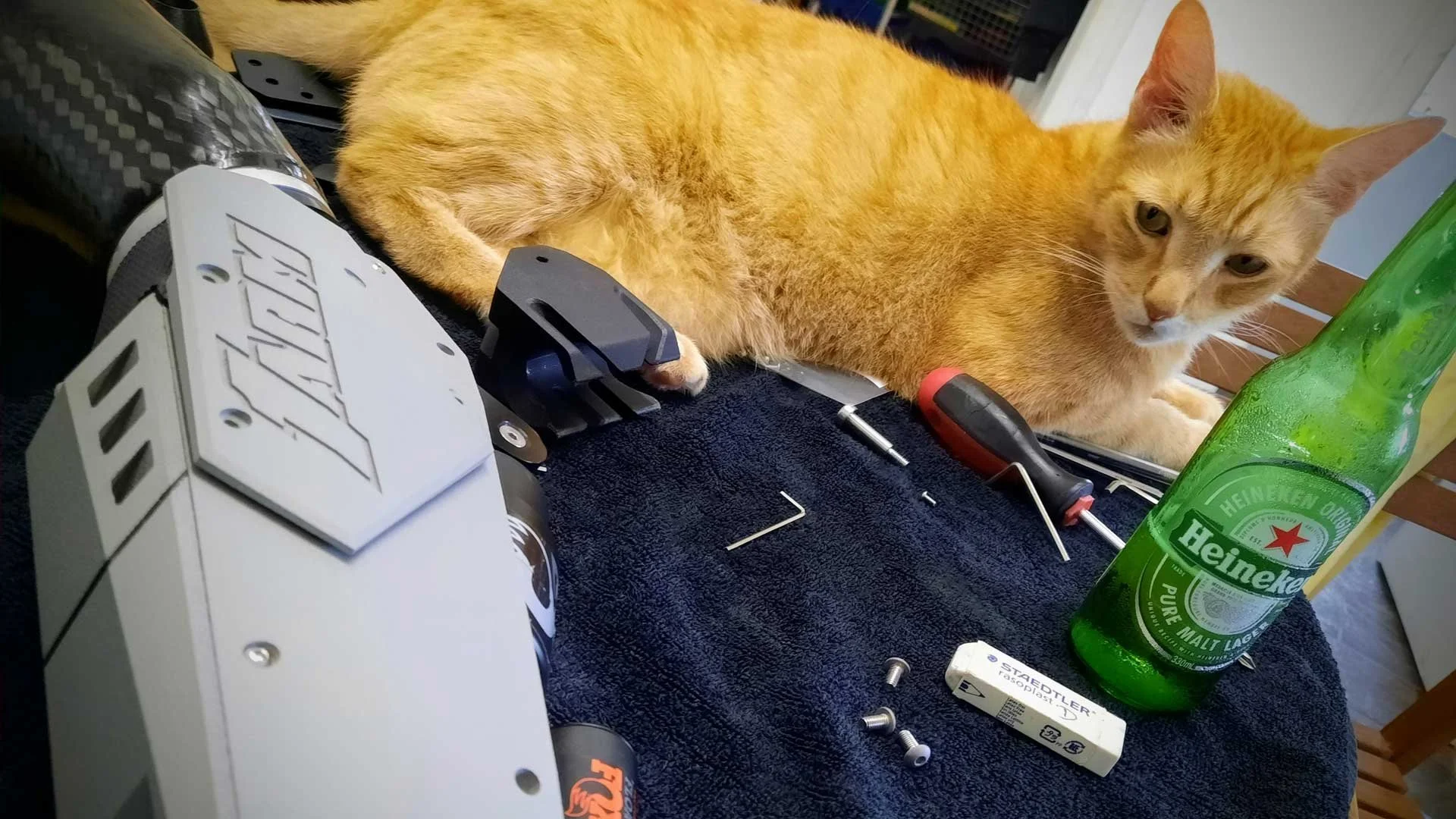
Doing the work—and getting help
I did the design, modelling and drawings. I’m a mechanical design draftsman; those were skills I could bring to the problem.
I worked long hours to afford the arm, then more hours developing it and solving problems.
But particular parts of the project needed other people’s expertise.
SSS Prosthetics in Mackay made the socket. When I brought them a broken socket I'd used with my riding arm, they strengthened the replacement based on the damage.
That might be how I provide feedback - “I did this, and it broke - make it not break when I do that”. I’m very lucky to have SSS in my corner.
DJ Design & Engineering helped get the parts made and anodised. He’s a mate, which also meant honest, professional feedback on tolerances, materials, and fit. Sometimes, when I pushed limits, the feedback was less professional but equally effective.
The Mountain Bike Suspension Centre revalved the Fox shock and continues to service it. Getting the shock dialled in for me—how I ride and what I’m riding—was key to getting the feel I wanted.
My daughter was much younger then. She put up with a lot of Dad working, and she was always there as my little helper.
What better feels like to me
With my current arm design, the difference started with sitting on the bike.
I could move.
My earlier setup felt more dependent on movement through my shoulder. The current arm lets me use the elbow and shoulder together in a way that feels more natural to me.
As I adjusted the shock, I found settings that made the movement feel more natural. This changed over time - as I used my shoulder more, strength improved. And, riding different bikes in different ways on different roads. Settings changed and shifted, but the arm movement still feels natural - low effort for smaller movements.
Development hasn’t stopped, either. There are now far more 3D-printed parts and fewer machined parts, and I think I can reduce the machining further.
I’m still finding things to improve.
What this means if you aren’t a designer
I’m not suggesting every amputee should learn CAD, build prototypes or make their own riding equipment.
I had particular skills and access to people who helped me put them to use.
What I do want to encourage is being specific about what you need from a prosthesis—and speaking up when it falls short.
Explain the task. Describe the difficult movement, the support you’re missing or the part that feels uncomfortable. Ask what can be adjusted, what alternatives exist and who else might have relevant expertise.
You don’t have to know the solution before asking the question.
There may be limits involving your body, available equipment, funding or access to help. Taking a break or changing direction isn’t a failure. But your experience using the equipment deserves to be heard.
For me, getting back on a motorcycle wasn’t the end of the job. It gave me a starting point for making the setup work better.
The arm is better for me now because it more closely meets the requirements I had from the beginning: movement, support, feedback and a feel I’m comfortable riding with.
That took persistence. It also took recognising what wasn’t right, using the skills I had and getting help where I needed it.
Like I always tell my daughter: be safe, be smart and have fun.