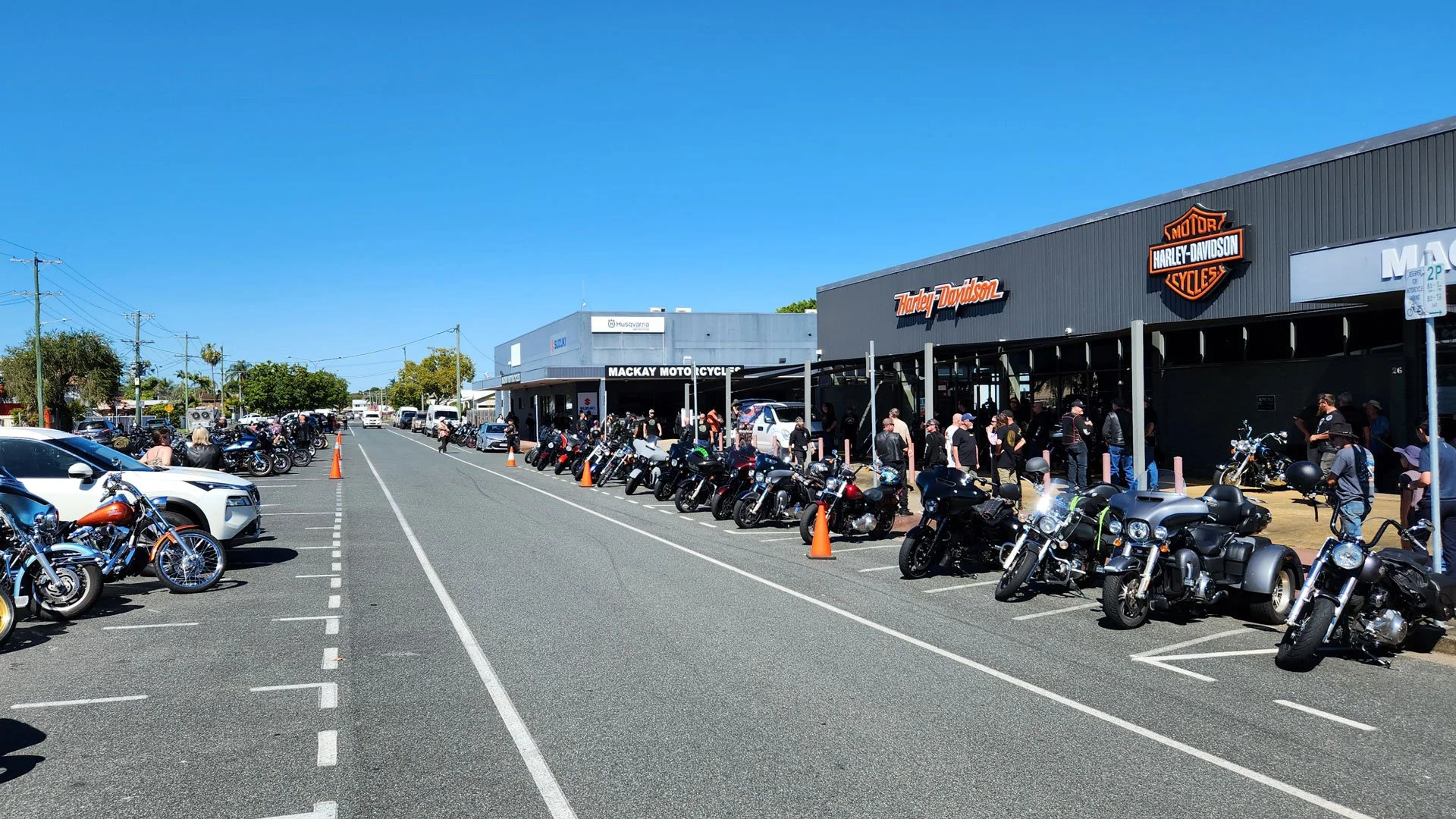
I’ve been thinking about group rides. The risks, the people, and what we celebrate as individual motorcyclists and as a motorcycling community.
How we ride alone and how we ride in a group can be different. I know my riding has had a habit of changing depending on who I was riding with. Sometimes that influence has been good. Sometimes I’ve needed to pull myself up.
Before my accident, I didn’t do group rides. Since returning to riding, I’ve done the rounds with groups in my town. These days, I mostly choose to ride alone or with fewer people.
That isn’t a blanket judgement on those groups. I have my own limits and conditions, and I’ve become clearer about sticking to them.
But what about someone who’s new to all of this?
What are you looking for?
Turning up to a group of strangers on motorcycles can be daunting. You share an interest, but you don’t yet know how they ride, where they go, or what happens when they get there.
An invitation from someone you know can help. It doesn’t automatically mean the whole group is a good fit.
Before joining, I think it’s worth asking yourself why you want to ride with these people.
Company? Learning? A shared interest in a particular kind of riding? Or do you want to prove you can keep up with the faster crowd?
Wanting to belong is understandable. The question is what you’re prepared to do for that acceptance.
What kind of riding do you admire? What does the group celebrate? Are those things actually aligned?
I’ve ridden with groups known for their pace. I don’t ride with them now. Telling someone that a group is fast won’t necessarily put them off—keeping up might be exactly what they’re hoping to achieve.
But keeping up doesn’t, by itself, tell you how well you’re riding or how much room you’ve left for something unexpected.
Ask before you leave
“Ride your own ride” is easy advice to give. I think we need to give new riders something more useful alongside it.
These are questions I’d encourage someone to ask before joining a group ride:
Question / What you’re trying to understand
How does the group handle different paces? / Whether your current ability and comfort level can be accommodated.
Where do we regroup, and how do we handle separated riders? / Whether falling behind has an agreed response.
Is there a planned route or destination? / Whether you know where you’re going if the group separates.
What do you do when something goes wrong? / What the group takes seriously, and whether there’s a practical plan.
What are we doing when we get there? / Whether the social side suits you, including your plan for getting home.
You don’t need to conduct a roadside job interview. A normal conversation can cover a lot.
I deliberately leave “something goes wrong” open-ended. I want to hear what comes to mind.
If the answer is all about cops and getting caught, I pay attention. If they talk seriously about someone getting hurt, a rider going missing, or a bike breaking down—and what they’d do—that’s more reassuring.
It isn’t a foolproof test. A sensible answer doesn’t guarantee a sensible ride. I’m listening for their priorities and their attitude.
If crashing is treated as a joke or an accepted price of keeping up, that doesn’t fit what I want from a ride.
And yes, I ask what happens at the destination. Some local rides I’ve encountered revolve around pub stops and drinking. A pub stop isn’t automatically a drinking session, but I want to know what I’m joining.
There can be more going on than the pace
Some women riders have told me about being invited along, then finding themselves in rides where men appeared to be competing for their attention through their riding.
Those are their accounts, and I’m not suggesting every group behaves that way. But it’s another reason to look beyond a friendly invitation and consider how the group actually behaves.
Whatever is driving the competition, you don’t have to participate in it to earn your place.
Experienced riders have a part to play here too. Making room for a newcomer shouldn’t depend on them already being a mate—or being confident enough to challenge everyone else.
A learner needs more than reassurance
If you’re a learner who requires supervision, agree on the arrangements with your supervisor before the ride.
Be clear about your current ability, your comfort level, and what happens if you want to slow down or leave. Agree on regrouping points and how you’ll communicate if the plan changes.
Supervisors can get caught up in a group ride too. Being qualified to supervise doesn’t make someone immune to getting carried away.
Your supervision needs don’t disappear because the group has disappeared up the road.
Have a backup plan. If possible, arrange a suitable backup supervisor you can call. Otherwise, know who could collect you or help organise another way home. Don’t turn being stranded into riding unsupervised.
For Queensland learners, the current supervision requirements are available on the Queensland Government’s “Rules for learner riders” page. Readers elsewhere should check their local requirements.
What if the ride isn’t what you expected?
I’ve spoken up about the pace, and I’ve simply slowed down and ridden at my own pace. In my experience, speaking up has had mixed results. Slowing down has often worked better, particularly when I’ve had a good relationship with the group.
Sometimes someone has dropped back with me.
On one particularly wild ride, nobody did. I went off riding by myself, and I didn’t ride with that group again.
I wouldn’t promise a new rider that someone will always stay with them. That’s why the arrangements matter before you leave.
Tell someone outside the ride where you’re going and when you expect to be back. Have their number available, and let them know if your plans change.
If things become uncomfortable, say so when you can safely stop and talk. You can decide you’re finished with the ride without making a speech or winning an argument.
If you feel you need a simple excuse to get out of an uncomfortable situation, use one. You don’t owe anyone a debate.
But leaving the group and riding home aren’t always the same thing. If you’re lost, need supervision, have been drinking, have crashed, or have a bike problem, stop somewhere safe and arrange suitable help. Getting yourself home might mean collecting the bike later.
My own boundary is firm. A crash, a near crash, or a ride that becomes a pub crawl is enough for me to step away from riding with that group. That’s my decision about the situations I’m willing to be part of.
Think about the ride afterwards
One of the things I love about riding is the time inside my helmet. It gives me a chance to think about the ride, the group, and how I felt about it.
Did I ride how I intended to? Did I feel pressure to keep up? Did the group do what they said they would? Would I go with them again?
Sometimes I work things out. Sometimes I just enjoy the ride home.
I’m sharing what I’ve experienced and the questions I find useful. I don’t have a perfect formula for choosing riding company.
You’re responsible for your decisions on the bike. That doesn’t excuse a group pressuring someone, abandoning a learner, or dismissing their concerns.
I love motorcycles and the people who ride them. I just don’t like seeing riders made to feel they have to push beyond their ability or comfort to be included.
Ask the questions. Pay attention to the answers—and the behaviour afterwards. You’re allowed to choose who you ride with, and you’re allowed to change your mind.